
Black worktops can suit a compact kitchen, a large open-plan room or a darker cabinet scheme. The result depends on how much dark surface is visible, what surrounds it and where light reaches the preparation areas.
A black island behaves differently from black worktops around every wall, while a heavily veined slab needs a different setting from a plain black or graphite design. Browse our dark quartz worktops to compare the main finish families.
Quick Answer:
How Do You Keep Black Worktops From Making the Kitchen Look Dark?
Use black deliberately rather than repeating it across every surface. Keep some larger areas around the worktop lighter, place direct task lighting over preparation zones and choose a quartz pattern that suits the amount of stone on display.
Check four things first:
- Where the black worktop will sit
- How much dark cabinetry is already in the room
- Which walls, floors or cabinet fronts will stay lighter
- Where daylight and task lighting reach the surface
Start With How Much Black the Room Will Show
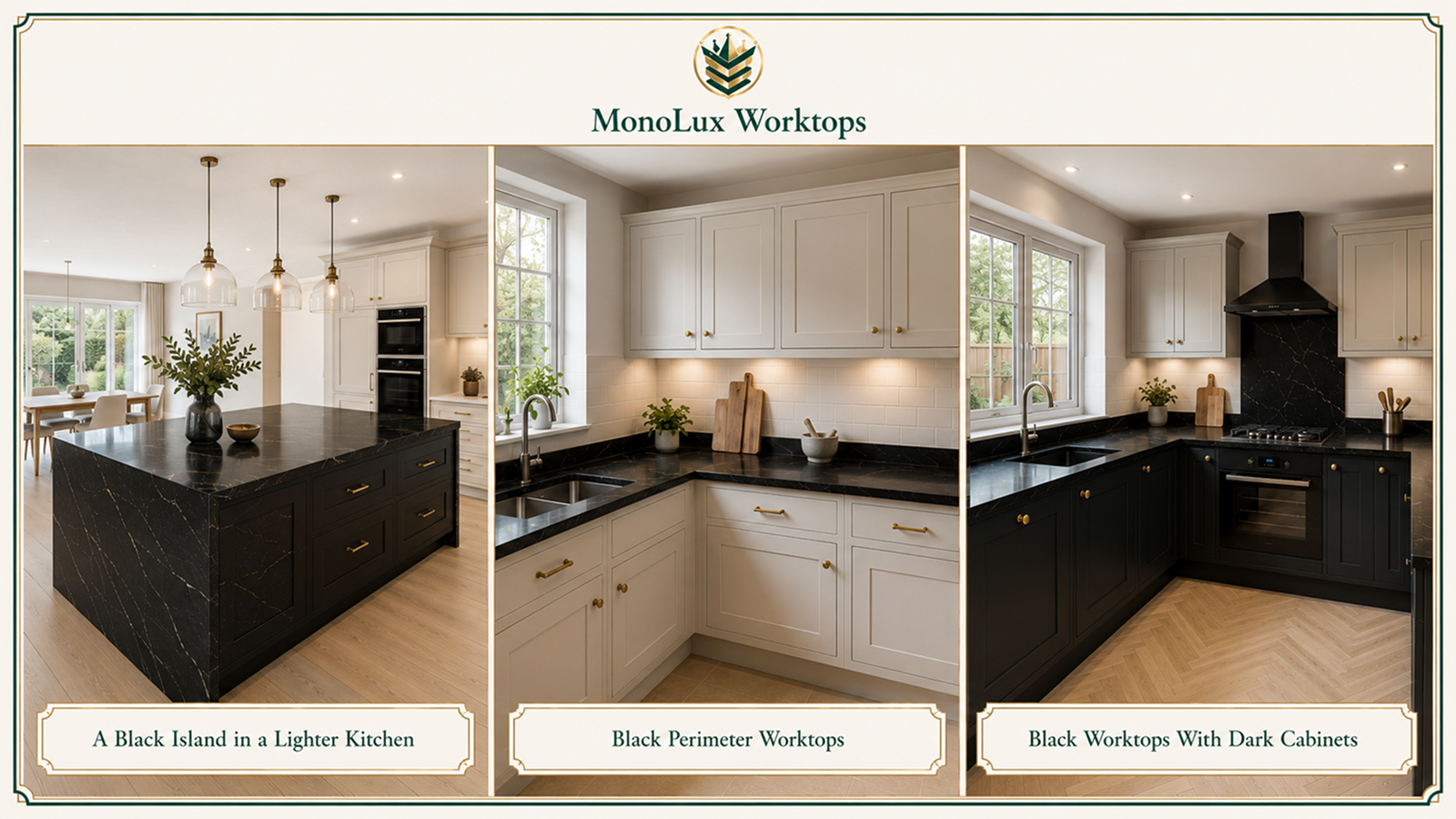
The same black quartz can act as one controlled feature on an island or become much more dominant when it runs around several walls.
A Black Island in a Lighter Kitchen
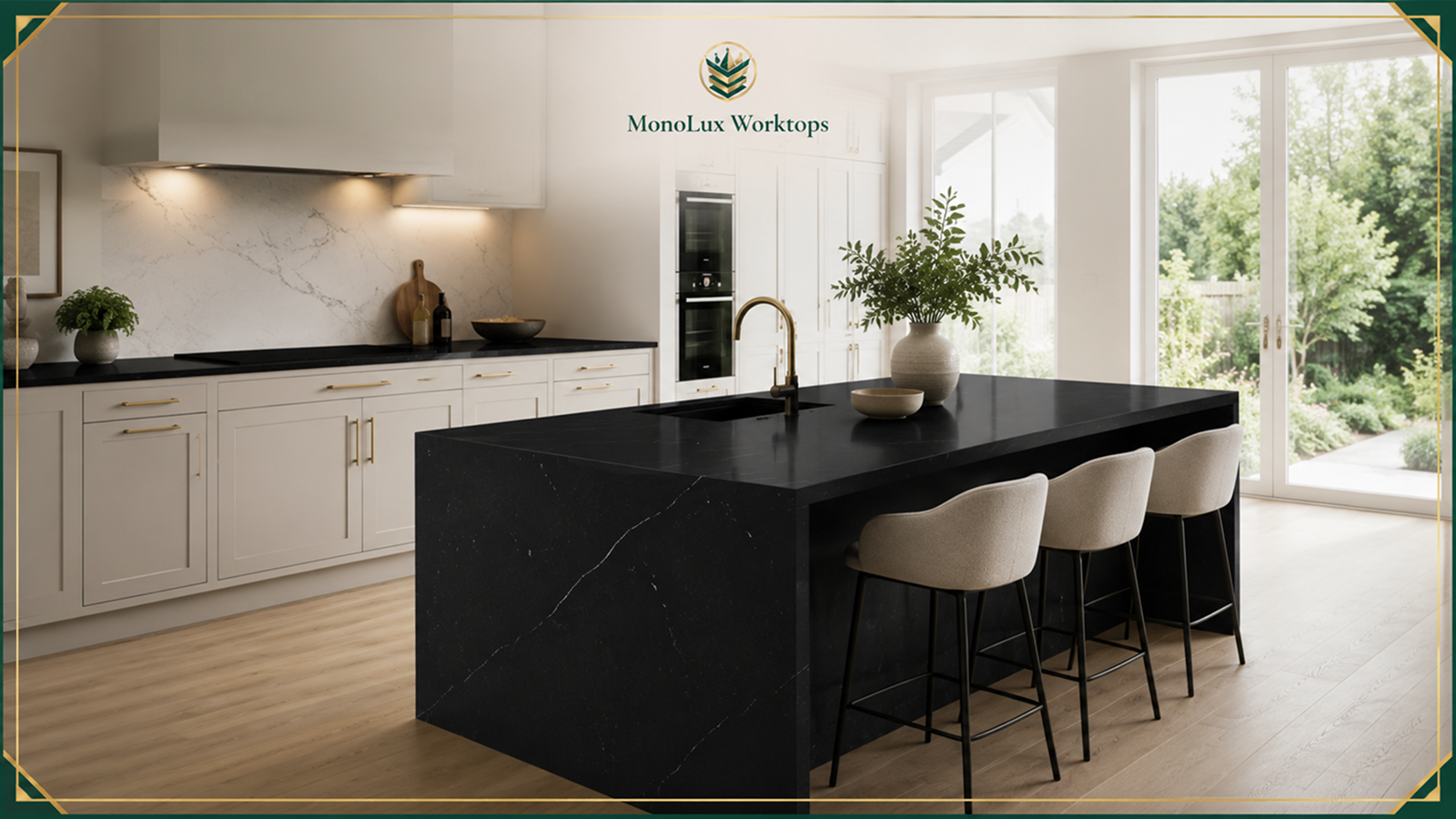
A black island concentrates the darker colour in one feature instead of carrying it around the room. This works well in open-plan kitchens, especially when the island is visible from the dining or living area.
Keep the perimeter quieter with pale cabinet fronts, lighter walls or timber flooring. Strong veining also has more room to show across an island than on a short run.
Black Perimeter Worktops
Perimeter worktops sit below windows, wall units and splashbacks, so the area above them has a strong effect on the final look. Light wall cabinets, pale paint or a simple splashback can keep a lighter surface at eye level.
A long U-shaped run creates more visible dark surface than two short sections in an L-shaped kitchen. Perimeter worktops also need direct lighting because wall units and the person using the worktop can cast shadows across sinks, corners and preparation zones.
Black Worktops With Dark Cabinets
Black worktops can work with charcoal, deep green, navy or black cabinetry, but the dark area then covers horizontal and vertical surfaces.
Check the room boundaries. Pale flooring, lighter walls, windows, glazed doors and a restrained splashback can keep the darker elements from joining into one solid block. Lighter upper cabinets with darker base units are another useful route.
| Layout | Main effect | What to check |
| Dark island | One concentrated dark feature | Island size, surrounding finishes and pendant placement |
| Dark perimeter | Black follows the room edges | Wall units, splashback and task lighting |
| Dark worktop and cabinets | More dark colour at several heights | Floors, walls, windows and total cabinet mass |
Balance Black Worktops With Cabinets, Walls and Floors
White, cream, warm off-white and pale grey cabinets keep more light-coloured surfaces at eye level. Oak, muted green and warm neutral cabinets create a softer transition than a sharp black-and-white scheme.
With darker cabinets, judge the total amount of dark colour rather than the doors and worktop separately. Full-height dark cabinetry may need paler walls or flooring around it.
Light-coloured room surfaces generally return more available light than darker ones. UCL research into surface reflectance and room lighting supports that general principle, though it does not create a fixed colour formula for kitchens.
Keep the splashback simpler when the quartz has strong veining. A plain tile, painted wall or controlled slab splashback is less likely to compete with the worktop and floor.
Light the Worktop, Not Only the Room
A bright ceiling does not help much if the sink and chopping area remain in shadow. Perimeter worktops beneath wall cabinets need direct task lighting across the front part of the surface.
The NKBA kitchen-planning guidance recommends placing under-cabinet lighting near the front edge to reduce shadows from the cabinet and the person using the worktop.
Pendants can define an island, but they may still need support from ceiling or task lighting. Check the shade, height and beam spread.
Also test where daylight reaches the worktop. A surface beside a window behaves differently from a corner beneath wall units. There is no black-worktop-specific LED temperature that suits every room, so check the quartz, cabinet door and planned light source together.
Match the Quartz Pattern to the Amount of Surface

Different dark quartz designs change the way the worktop reads across the room. They do not change the amount of daylight entering the kitchen.
| Dark quartz style | Visual role | MonoLux example |
| Plain black | One uninterrupted dark field | Compare in person before using it across long runs |
| Black sparkle | Visible point highlights under direct light | Mono Black Sparkle |
| Graphite or charcoal | Dark contrast without a jet-black field | Mono Graphite Ice |
| Black marble-effect | Strong veining that becomes part of the room design | Mono Eternal Marquina |
| Concrete-effect | A quieter industrial look, depending on the product | Mono Cement Lux |
Sparkle catches point highlights, but it does not light the room. Veining adds contrast, but it does not provide higher reflectance. Graphite may appear less stark than jet black, though that remains a visual judgement.
Finish names also need checking. Cement Lux has a satin matt finish, while Rugged Concrete is polished. “Concrete-effect” describes the appearance, not a guaranteed tactile texture.
Three MonoLux Kitchens That Use Dark Worktops Differently
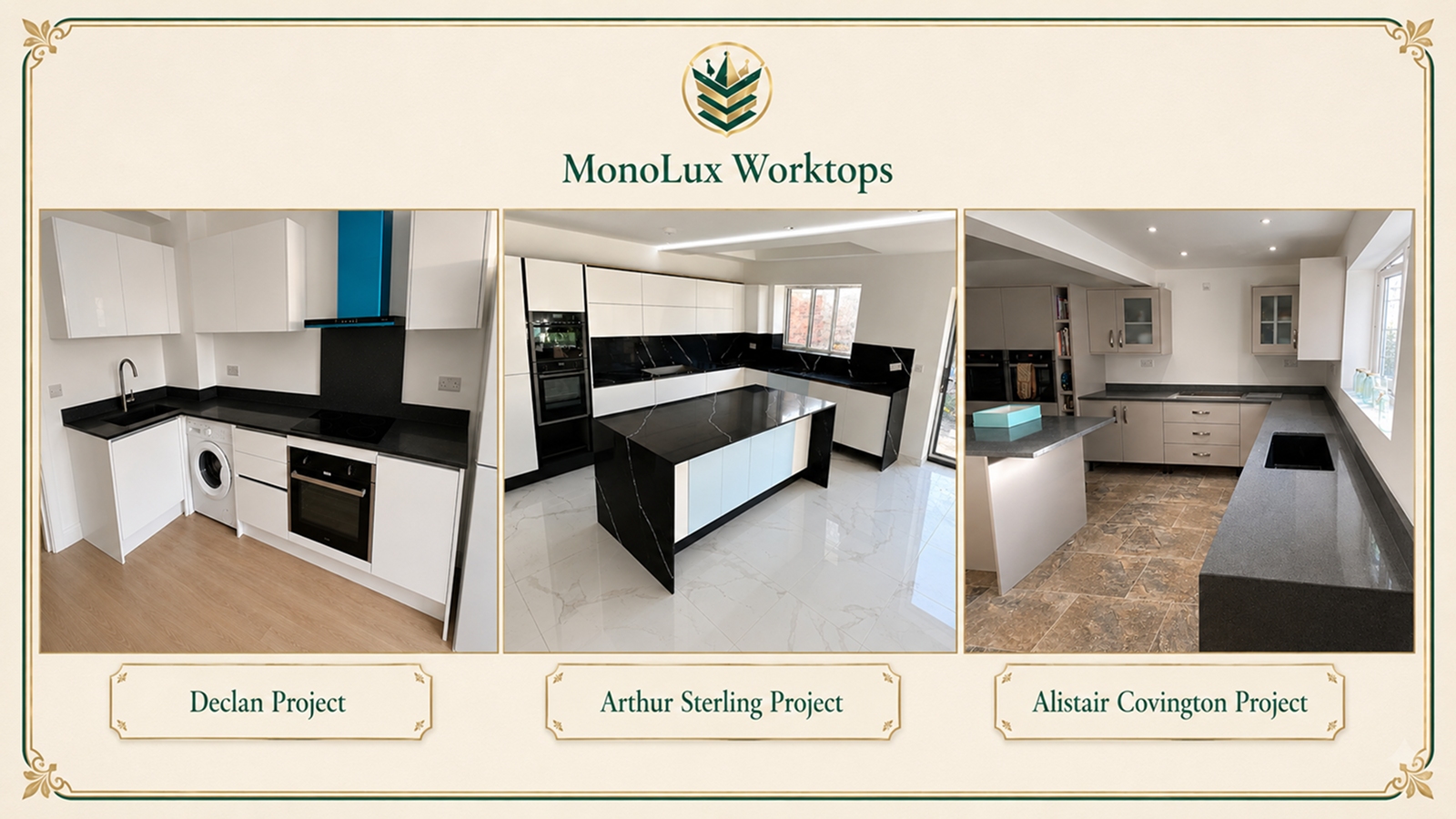
For the Declan project, we used short Black Sparkle runs with white gloss cabinets, white walls and pale oak-effect flooring. It shows how a compact kitchen can carry a dark worktop without surrounding it with more dark finishes.
In the Alistair Covington project, we paired Graphite Ice with light traditional cabinetry, a beige floor and a nearby window.
Lastly, for the Arthur Sterling project, we went for Eternal Marquina across perimeter runs, a waterfall island and a full-height splashback. White gloss cabinetry and pale flooring give the extensive black surface clearer boundaries.
You can read about these projects and see more photos of how they turned out by clicking on the name of each project above.
Check the Whole Scheme Before Ordering
Before choosing:
- Place the sample flat at worktop height.
- Compare it with the cabinet door, floor and splashback together.
- Check it in daylight and with the evening lights on.
- View a full slab or completed project before choosing strong veining.
- Compare 20mm and 30mm quartz worktops if the visible edge affects the design.
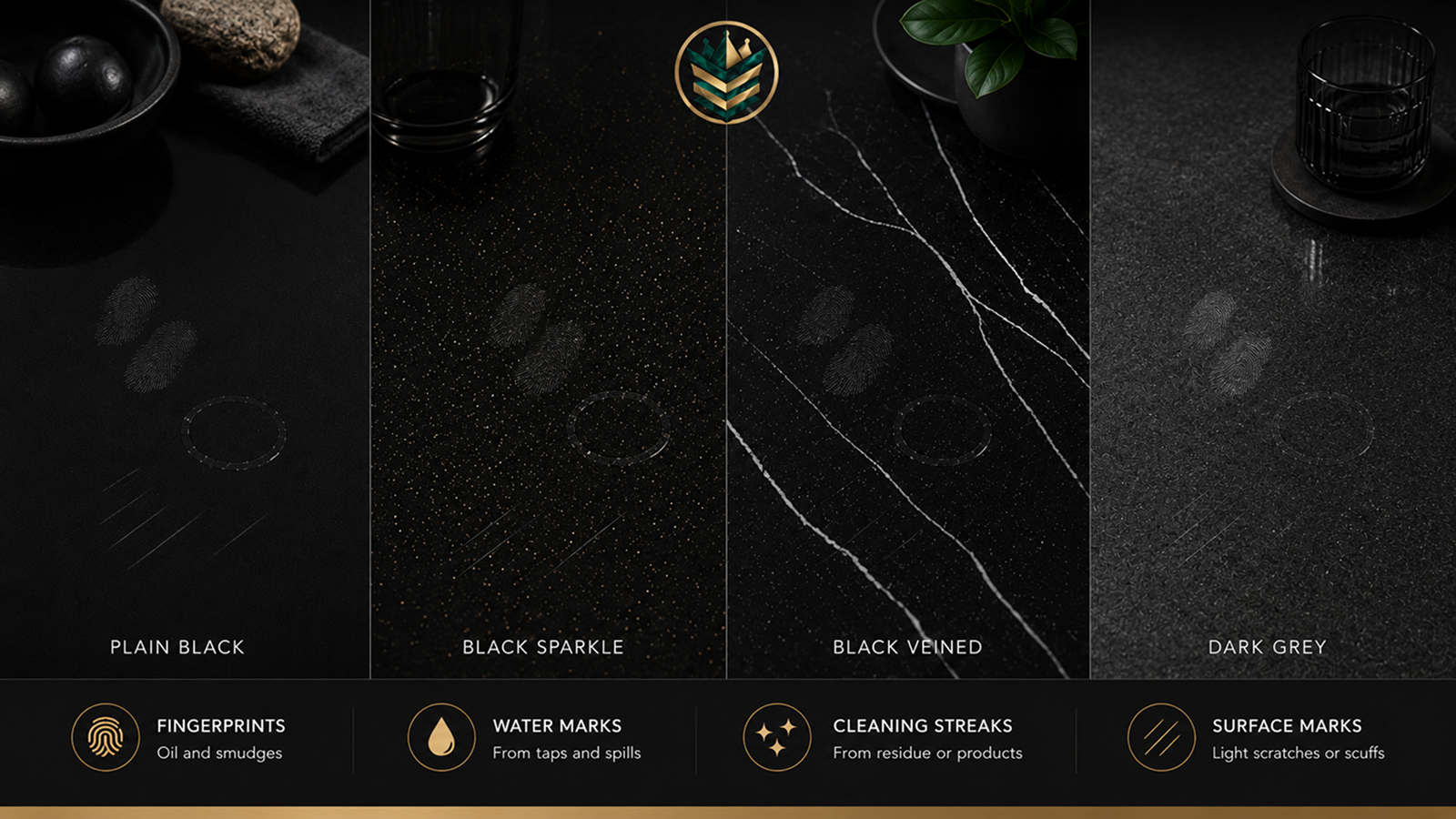
Surface marks are a separate decision. Our guide to black quartz scratches and fingerprints explains how plain, sparkle, veined, and graphite finishes differ in daily use.
Compare Dark Quartz Worktops With MonoLux
MonoLux offers black sparkle, graphite, black marble-effect, dark grey and concrete-effect options. Browse our quartz worktops, compare material prices from £89/m² and order free samples from available product pages.
After narrowing the choice, use our online quartz worktop price calculator to add your measurements, thickness, cut-outs, upstands, splashbacks and fitting details. Our team reviews submitted quotes within two hours and manages templating, in-house fabrication, delivery and installation.
Our quartz worktop installation guide explains what happens next.
FAQs
- Do black worktops make a kitchen look smaller?
Not by themselves. The result depends on the amount of black surface, cabinet height, wall and floor colours, daylight and task lighting. - Can black worktops work in a small kitchen?
Yes. Short dark runs can sit well with lighter cabinets, pale walls or flooring and direct task lighting over the main preparation areas. - What cabinet colours go with black worktops?
White, cream, pale grey, oak, muted green and warm neutrals are useful starting points. Darker cabinets can also work with lighter room boundaries. - Should the floor be lighter or darker than black worktops?
A lighter floor keeps another large surface pale. Dark floors can still work in rooms with enough lighter walls, cabinets and daylight. - What lighting works best over black worktops?
Use direct task lighting over perimeter preparation areas and suitable lighting above islands. Ceiling lights alone may leave shadows beneath wall cabinets. - Is a black island easier to balance than black perimeter worktops?
Often, because the dark colour is concentrated in one feature. Island size, nearby cabinets, flooring, walls and lighting still affect the result. - Does black sparkle make a kitchen brighter?
No. Sparkle catches highlights from nearby lights, but it does not increase the room’s ambient light. - Can black worktops work with dark cabinets?
Yes. Use lighter walls, flooring, splashbacks, windows or upper cabinets to give the scheme clearer boundaries.