
White quartz is one of the most popular choices for bright kitchens, but it also raises a fair concern: will a white worktop stay white after years of cooking, cleaning, sunlight and family use?
Good-quality white quartz is highly stain-resistant, but it still needs sensible care. Spilt coffee wiped up straight away, or a little limescale near the sink, certainly does not stain or yellow your white quartz worktop like a hot pan or UV exposure.
Many buyers compare stain resistance, long-term care and quartz worktop cost together, because a white surface only feels like good value if it still looks bright after everyday use.
This guide explains what can mark white quartz, what can make it look yellow, how to clean it safely, and how to choose a white quartz worktop that suits your kitchen habits.
Quick Answer: Does White Quartz Stain or Turn Yellow?
White quartz does not stain easily under normal kitchen use. It is non-porous, so tea, coffee, wine, sauces and cooking oils do not soak into it like they can with unsealed natural stone. Most everyday spills can be wiped away with warm water, mild detergent and a soft cloth.
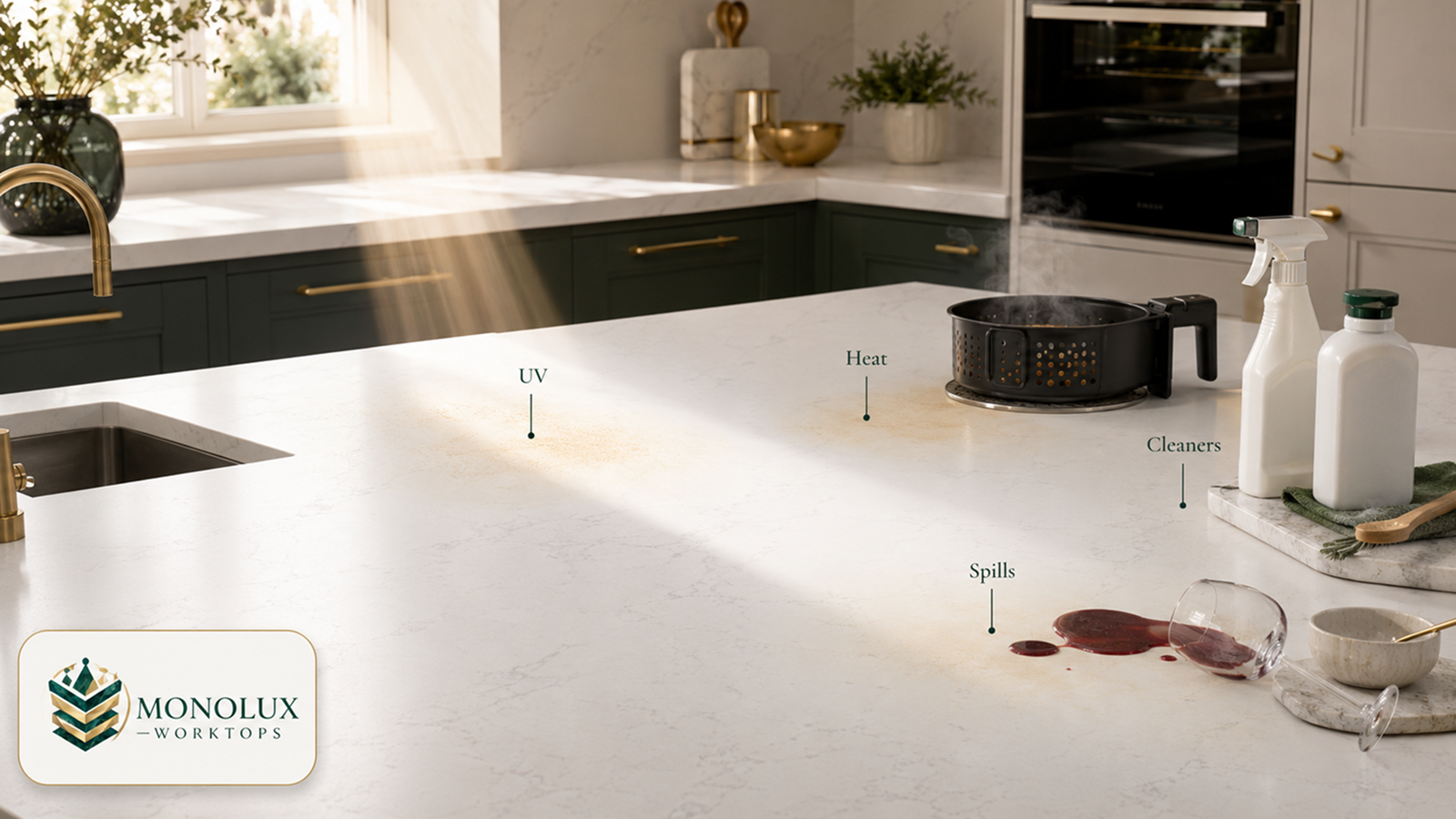
Good-quality white quartz should also stay bright in a normal indoor kitchen. Yellowing is usually linked to specific stress points, such as prolonged direct sunlight, hot pans, harsh cleaners, poor-quality resin or strong pigments left on the surface for too long.
- Everyday spills: usually safe if cleaned promptly.
- Dried-on residue: often removable with quartz-safe cleaning.
- Heat marks: may be permanent.
- UV yellowing: usually gradual and linked to direct sunlight.
- Chemical damage: often caused by bleach-heavy or aggressive cleaners.
Overall, white quartz is a practical, stain-resistant kitchen surface when the slab is good quality, fitted properly and cared for with the right cleaning habits, all of which we are covering in the rest of this article.
Why White Quartz Can Look Stained When It Is Only Marked
Many homeowners use the word “stain” for any visible mark on a white worktop. From a fitter’s point of view, that mark could be several different things. Some are simple cleaning issues. Others are signs that the surface has been exposed to heat, sunlight or a harsh product.
| Mark type | What it looks like | Likely cause |
| Surface residue | Cloudy patch | Soap, limescale, cleaner film |
| Pigment mark | Tea, curry or coffee tone | Spill left too long |
| Heat mark | Yellow or brown patch | Hot pan or heated appliance |
| UV change | Warm uneven tone | Direct sunlight |
| Chemical damage | Dull or pale patch | Strong cleaner |
The style of white quartz also affects how visible small marks look during daily use. A very plain white surface can show crumbs, water spots or cleaner haze faster, while sparkle, soft veining or marble-effect movement can make light day-to-day marks less noticeable.
If you are comparing different white quartz worktops, it is worth checking samples in your own kitchen lighting rather than judging the colour from a screen.
What Causes White Quartz to Turn Yellow?
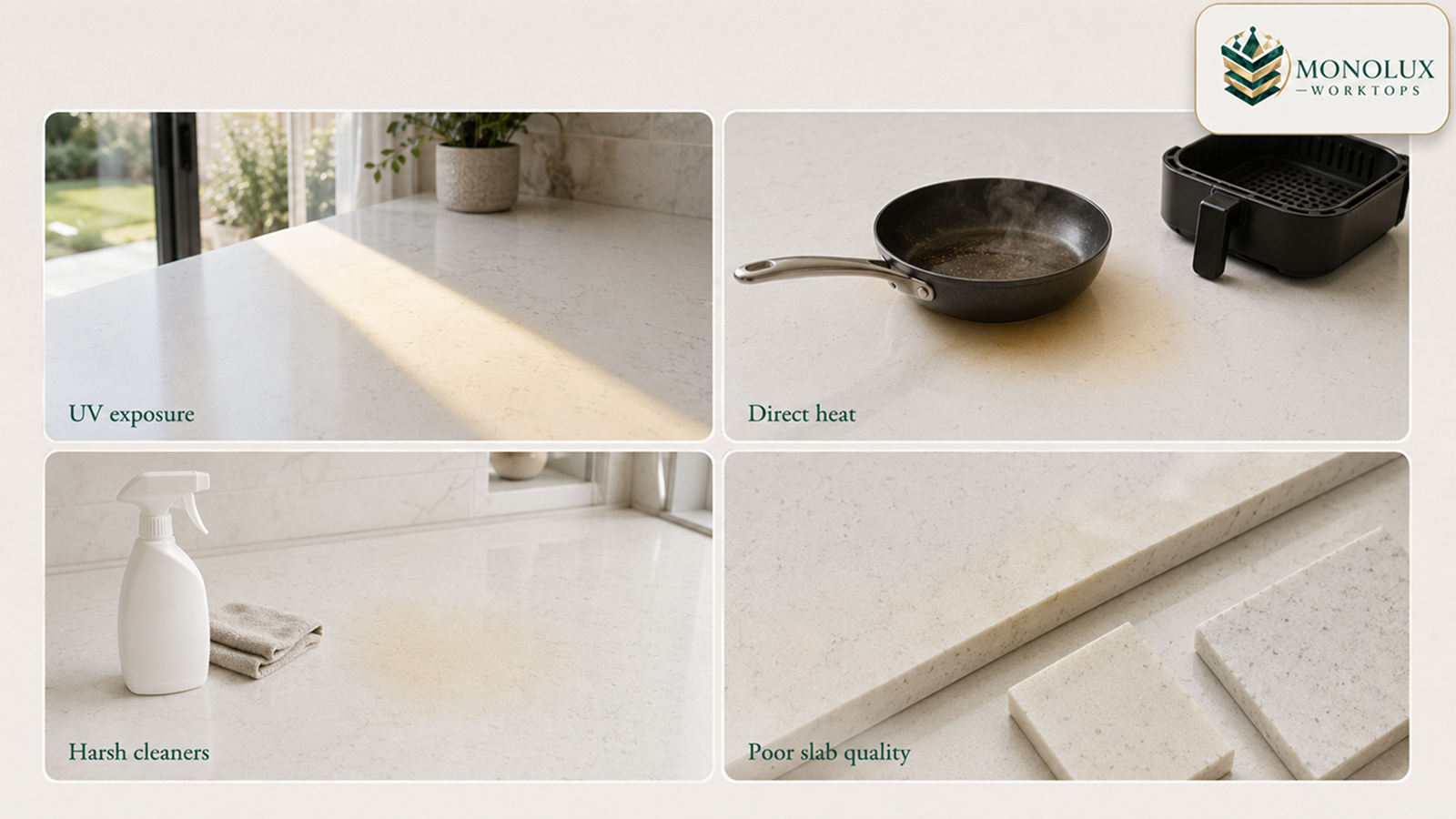
White quartz does not usually turn yellow by age alone. If a white quartz surface starts to look warmer, patchy, dull or yellowed, there is normally a cause behind it. The most common causes are direct sunlight, heat, harsh cleaners, or a low-quality slab made with weaker resin.
Prolonged Direct Sunlight
White and light quartz can be affected by long periods of direct UV exposure. This is more likely in kitchens with large bi-fold doors, rooflights, glass extensions, conservatory-style layouts or worktops placed in strong sun for hours each day.
For most indoor UK kitchens, white quartz is still a practical choice; however, the risk is higher when the same patch of surface gets repeated direct sunlight for long periods.
If your kitchen is very bright, use blinds, UV film or shading during the strongest sun. It also helps to move trays, appliances and decorative items now and then so one area is not permanently covered while the surrounding surface is exposed.
Hot Pans and Heated Appliances
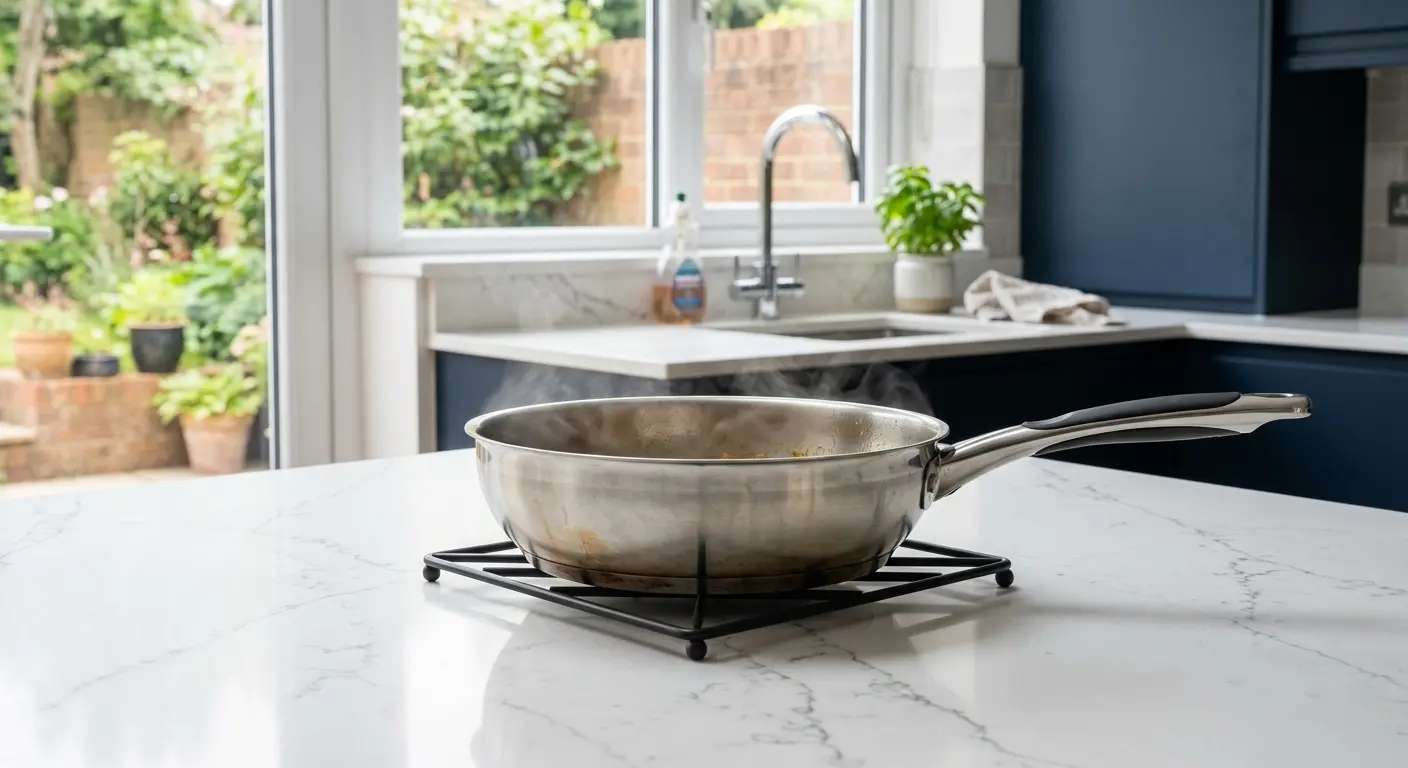
Quartz handles everyday kitchen use well, but it is not heat-proof. Hot pans, oven trays, air fryer baskets, slow cookers and heated appliances should not sit directly on the worktop.
The problem is not the quartz mineral itself. The resin binder inside engineered quartz can react to sudden or prolonged heat. On a white surface, that can show as a yellow, brown or dull patch. This is why a trivet, heat mat or pan stand should be part of daily use, especially around hobs and cooking zones.
For a complete guide to heat marks, pans, oven trays and air fryer baskets, read our guide to hot pans on quartz worktops.
Harsh Cleaners
Strong cleaning products can damage the surface finish or react with the resin. High-concentration bleach, oven cleaner, caustic soda, paint stripper, solvents and strong acidic or alkaline cleaners are not suitable for quartz worktops.
A common mistake is trying to fix a mark by scrubbing harder or reaching for a stronger product. That can turn a small residue mark into a bigger surface problem. White quartz should be cleaned gently and consistently, not aggressively.
Poor-Quality Resin or Unverified Slabs
White quartz is less forgiving of poor slab quality because any warmth, patchiness or discolouration is easier to see on a light surface. Low-quality resin, weak manufacturing control or bargain unverified slabs can make yellowing more likely.
Which Spills Are Most Likely to Stain White Quartz?
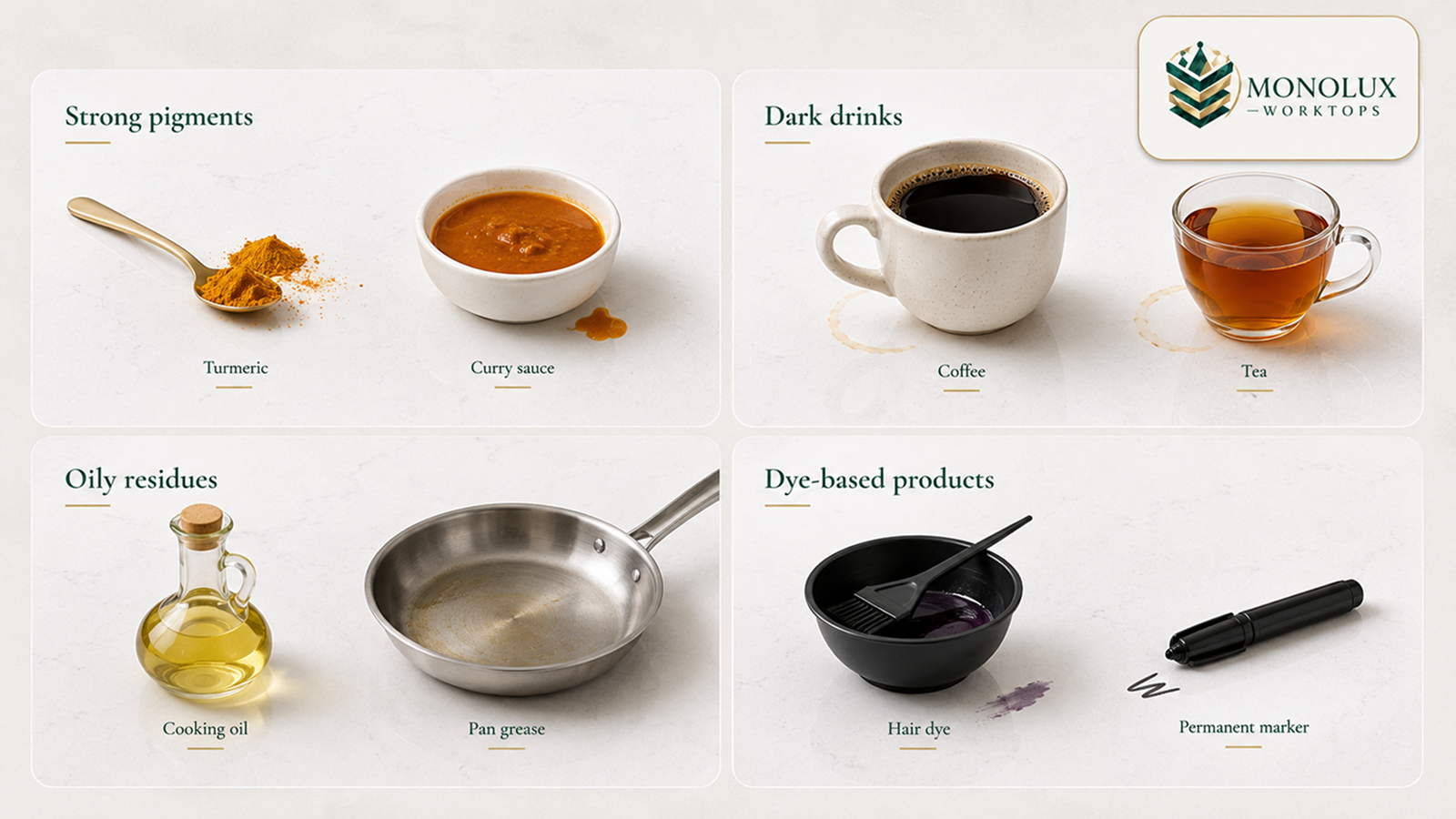
White quartz is non-porous, so most kitchen spills stay on the surface rather than soaking into the slab. That is why a quick coffee spill or a splash of sauce is usually not a serious problem. The risk rises when a spill is dark, oily, dye-based, or left to dry before cleaning.
The higher-risk examples are:
- Strong pigments: turmeric, curry sauce, beetroot, red wine, tomato-based sauces
- Dark drinks: black coffee, tea, fruit juice, cola
- Oily residues: cooking oil, butter, pan grease, oily sauces
- Dye-based products: hair dye, permanent marker, nail products
So try to make sure that you wipe these spills in particular much more quickly.
How to Clean White Quartz Without Dulling It
White quartz does not need specialist polishing, waxes or harsh stain removers for normal use. All it needs is regular wiping, prompt spill cleaning and the right cloth.
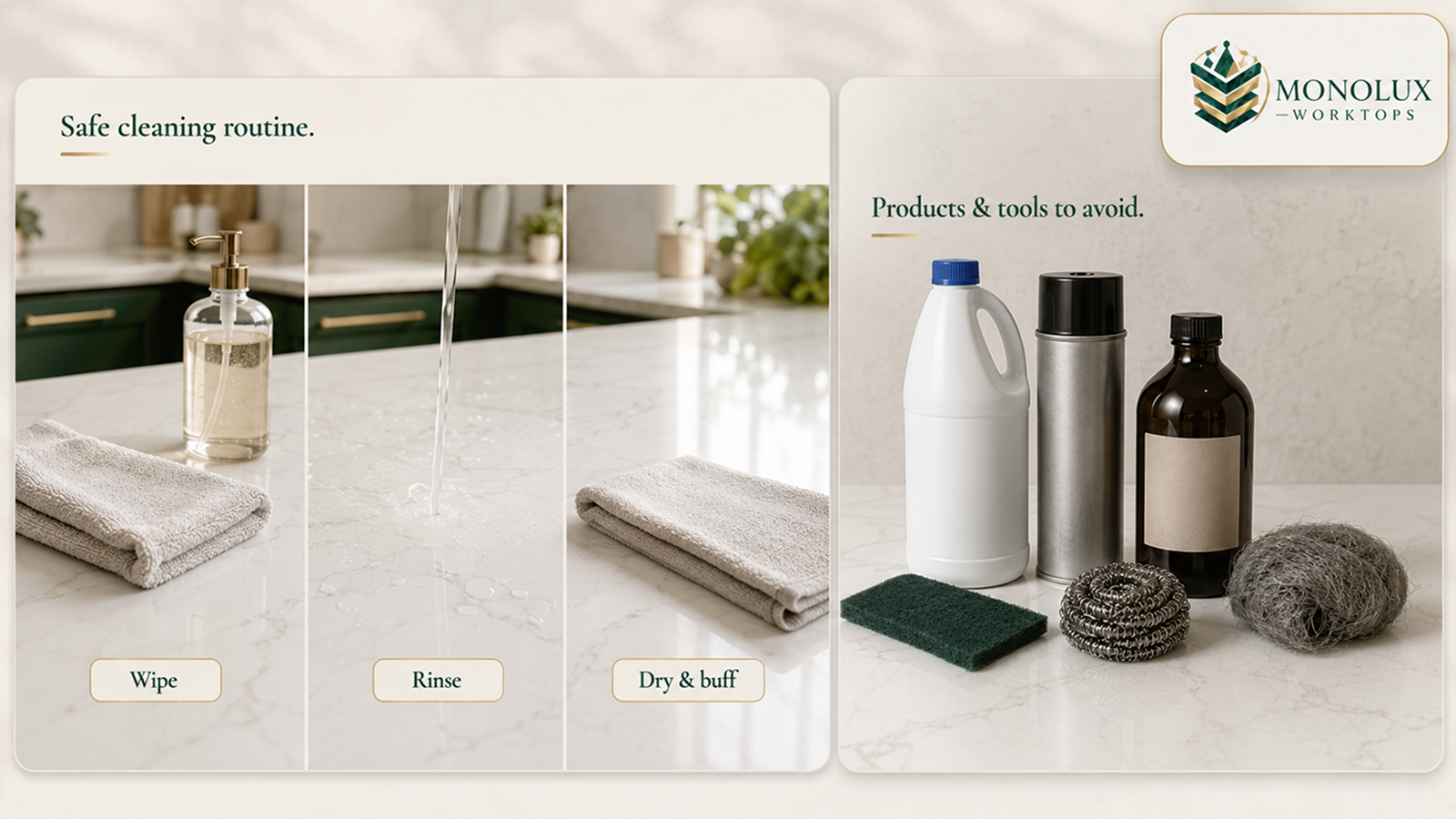
Follow this routine:
- Wipe the surface with warm water and a mild detergent.
- Use a soft cloth or non-abrasive sponge.
- Rinse the area with clean water.
- Dry the worktop with a soft cloth or paper towel.
- Buff lightly with a microfibre cloth for a clearer finish.
- For dried residue, let a quartz-safe cleaner sit briefly before wiping.
- Around taps and sinks, remove limescale gently and dry the area fully.
You can learn more about quartz worktop care and cleaning here: quartz worktop care guide.
Products and tools to avoid:
- metal scourers
- steel wool
- abrasive cleaning pads
- furniture polish
- waxes
- oven cleaner
- caustic soda
- strong acidic or alkaline cleaners
- high-concentration bleach
- solvents and industrial chemicals
If a mark does not come off with safe cleaning, do not keep scrubbing. Take a clear photo, note what caused the mark if you know, and ask the supplier or fitter for advice. This is especially important with yellow, brown, dull or patchy marks, because those may point to heat, chemical exposure or UV rather than ordinary surface dirt.
Is White Quartz a Good Choice For a Busy Family Kitchen?
White quartz can work very well in a busy family kitchen because it is non-porous, easy to wipe and does not need sealing. The main thing to keep in mind is visibility, because a plain white surface will show crumbs, dried splashes, water spots and cleaner haze much more clearly than a darker or busier worktop.
For some homes, that is part of the appeal. White quartz makes the kitchen look clean, bright and open, plus it makes spills easier to spot before they dry. The trade-off is that you will need to clean it a little more regularly, especially if you choose a very plain white finish rather than a sparkle, soft-veined or marble-effect surface.
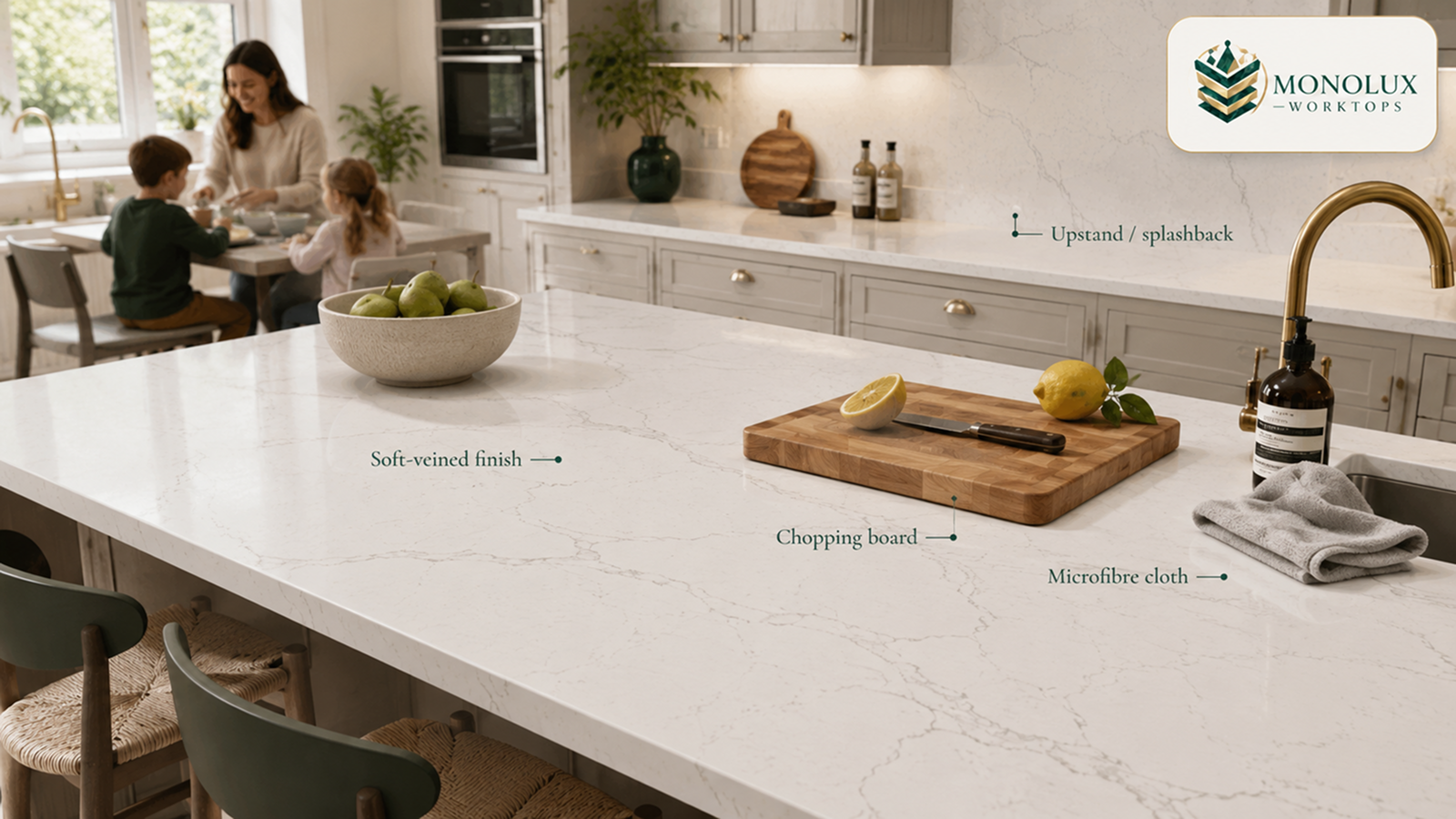
For family kitchens, these choices usually make white quartz easier to live with:
- a soft-veined or sparkle finish if you do not want every small mark to stand out
- upstands or a splashback behind busy cooking and sink areas
- a chopping board for prep, especially with sharp knives or heavy pans
- a microfibre cloth nearby for quick drying after cleaning
White quartz should not feel delicate. It is a practical kitchen surface, but the most compatible white quartz worktop for your kitchen is determined by matching the finish to the way the kitchen is used.
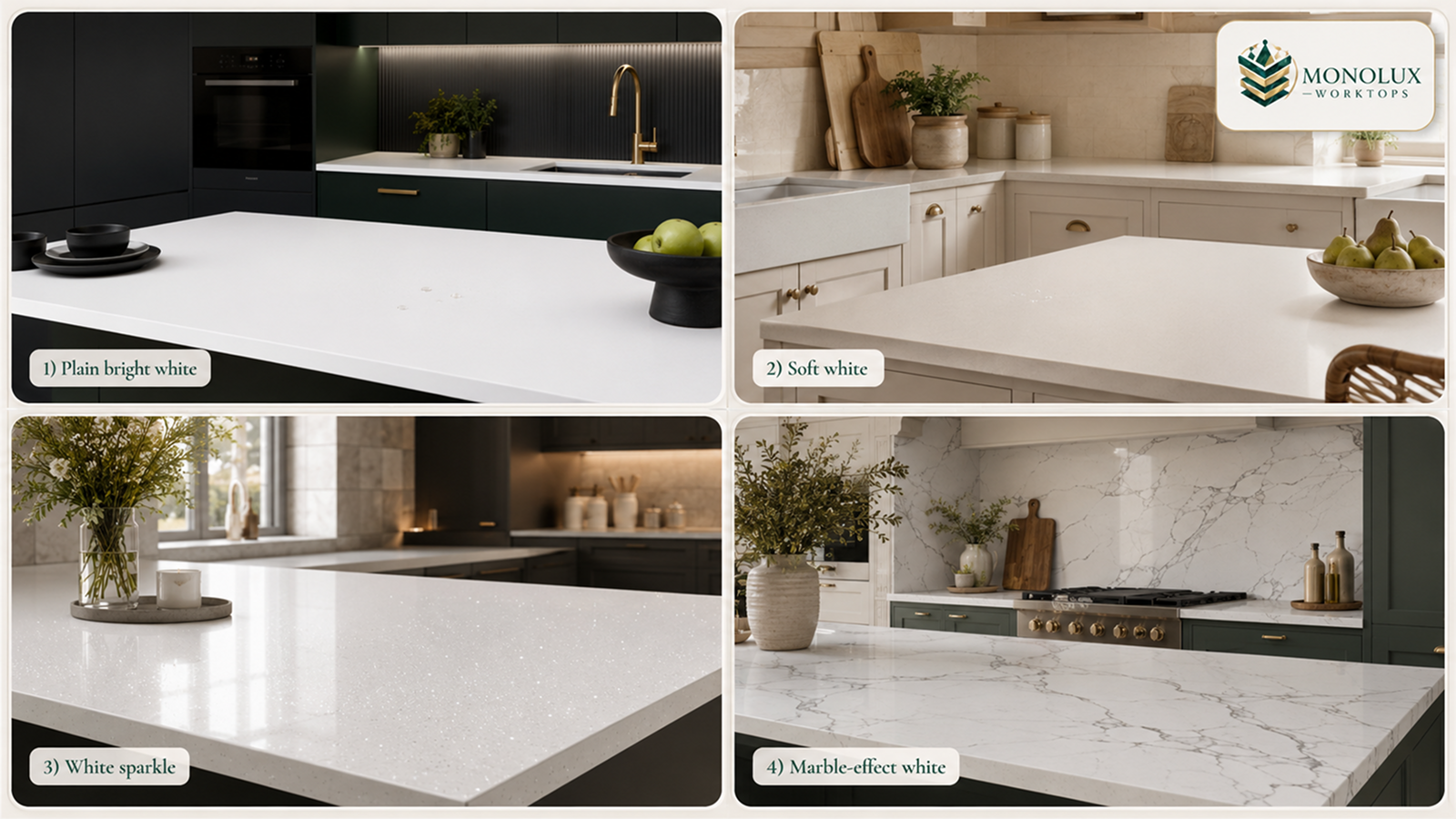
White Quartz Choices That Hide Daily Marks Better
Two white quartz worktops can have the same care routine and still look different after a normal day of cooking. The background, pattern and flecks affect how visible small marks look between cleans.
| White quartz style | Best fit | How it handles daily marks |
| Plain bright white | Minimal kitchens, compact spaces, strong contrast cabinets | Shows crumbs, water spots and streaks fastest |
| Soft white | Warmer kitchens, shaker cabinets, natural textures | Looks less stark than pure white |
| White sparkle | Busy kitchens, darker rooms, light-reflecting designs | Flecks help soften small day-to-day marks |
| Marble-effect white | Islands, splashbacks, classic kitchens | Veining breaks up empty space and adds movement |
A clean, plain option such as Ultra White quartz suits buyers who want a sharp, crisp surface and do not mind a little more visible upkeep. It works especially well with dark cabinetry, handleless kitchens and smaller rooms where light matters.
If you want a white worktop that feels softer in daily use, look at sparkle, light veining or marble-effect designs as well. They still give the bright white look, but the surface has more movement, which can make light marks less noticeable between cleans.
For a broader style breakdown, our white quartz kitchen design guide compares plain, veined, sparkle and warmer white options in more detail.
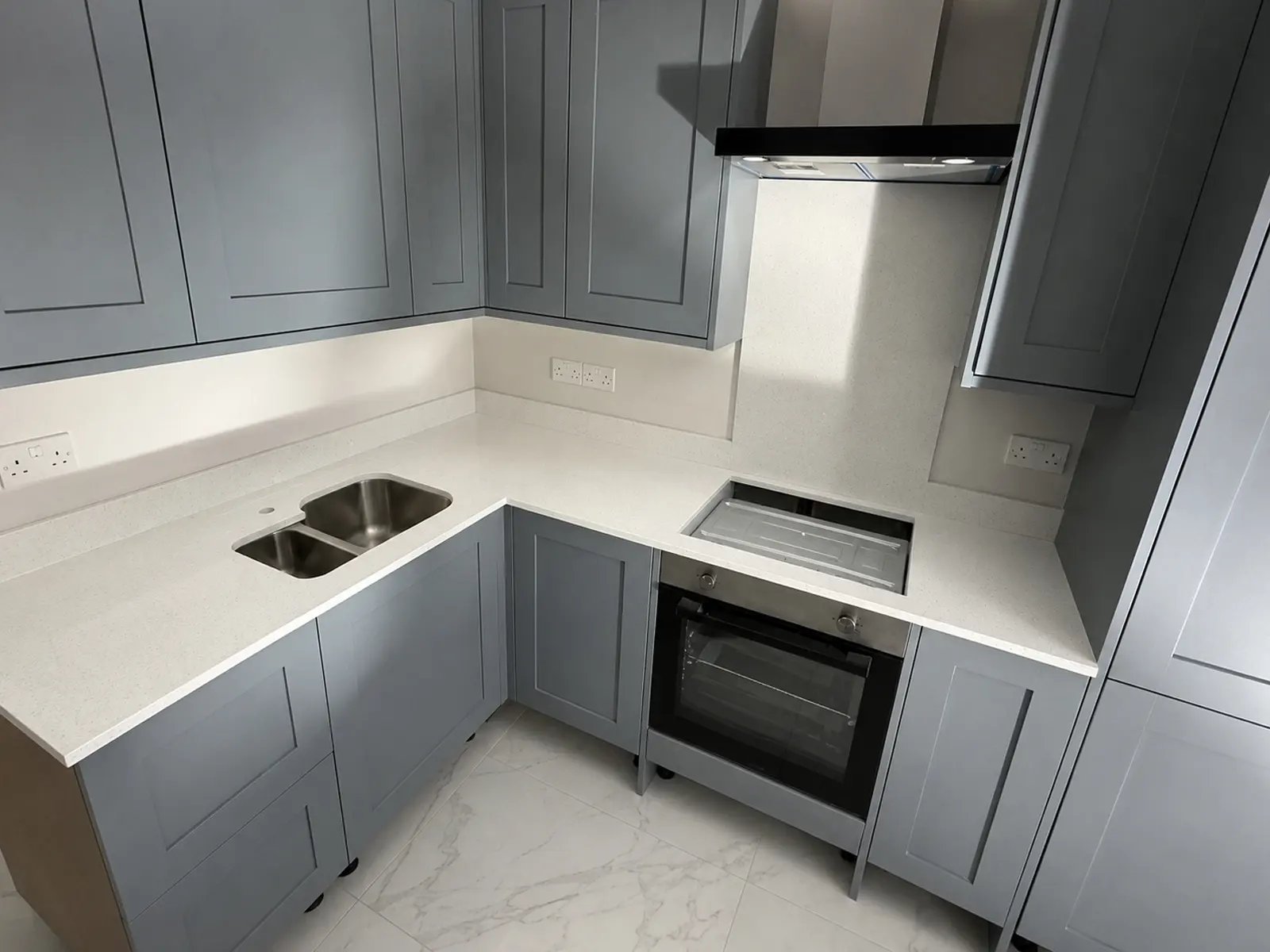
A MonoLux White Quartz Kitchen Example
Our Basingstoke kitchen transformation featuring Mono Arctic Starburst quartz is a useful example of white quartz chosen for both brightness and everyday practicality.
The kitchen used blue-grey shaker-style cabinetry with an efficient L-shaped layout. Our Arctic Starburst quartz gave the room a lighter, more contemporary surface, while the matching upstands and quartz chopping board over the sink made the finish feel more considered.
This type of white sparkle quartz is helpful for buyers who like a bright surface but do not want a completely flat plain-white look. The reflective flecks add light and soften the appearance of small day-to-day marks, while the usual care habits still apply around the hob, sink and prep zones.
You can see more photos of the finished kitchen and read the full project story here: Basingstoke Kitchen Transformation Featuring Mono Arctic Starburst Quartz
Before You Choose White Quartz: Care, Samples and Colour Checks
Before choosing a white quartz worktop, check the details that affect how it will look after day-to-day use, rather than just how bright it looks in a product photo.
Use this quick check before ordering:
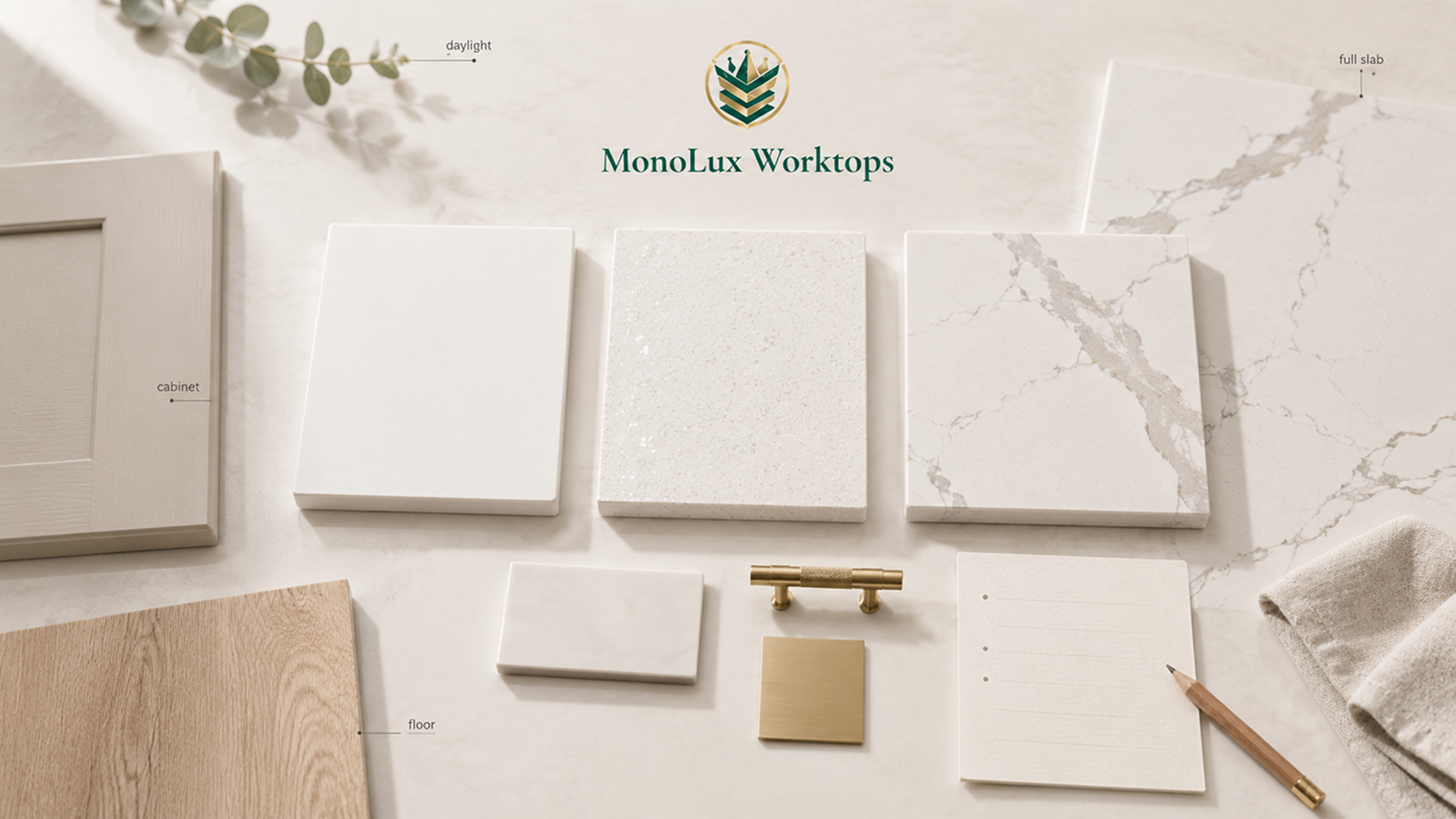
- Check the sample in your own kitchen: daylight, evening lighting, cabinet colour and flooring can all change how white quartz looks.
- Think about mark visibility: plain white gives the crispest look, while sparkle, soft-veined and marble-effect finishes can hide small daily marks more easily.
- Look at the busiest zones: hobs, sinks, prep runs and breakfast bars usually need more thought than quiet corners.
- Plan protective details early: upstands, splashbacks, draining grooves and chopping boards can make the finished kitchen easier to live with.
- Ask about care before fitting: the right cleaning routine should be clear before the worktop is installed, not after the first stubborn mark appears.
- Price the fitted worktop properly: colour, thickness, cut-outs, edge profile, splashbacks and installation details all affect the final quote.
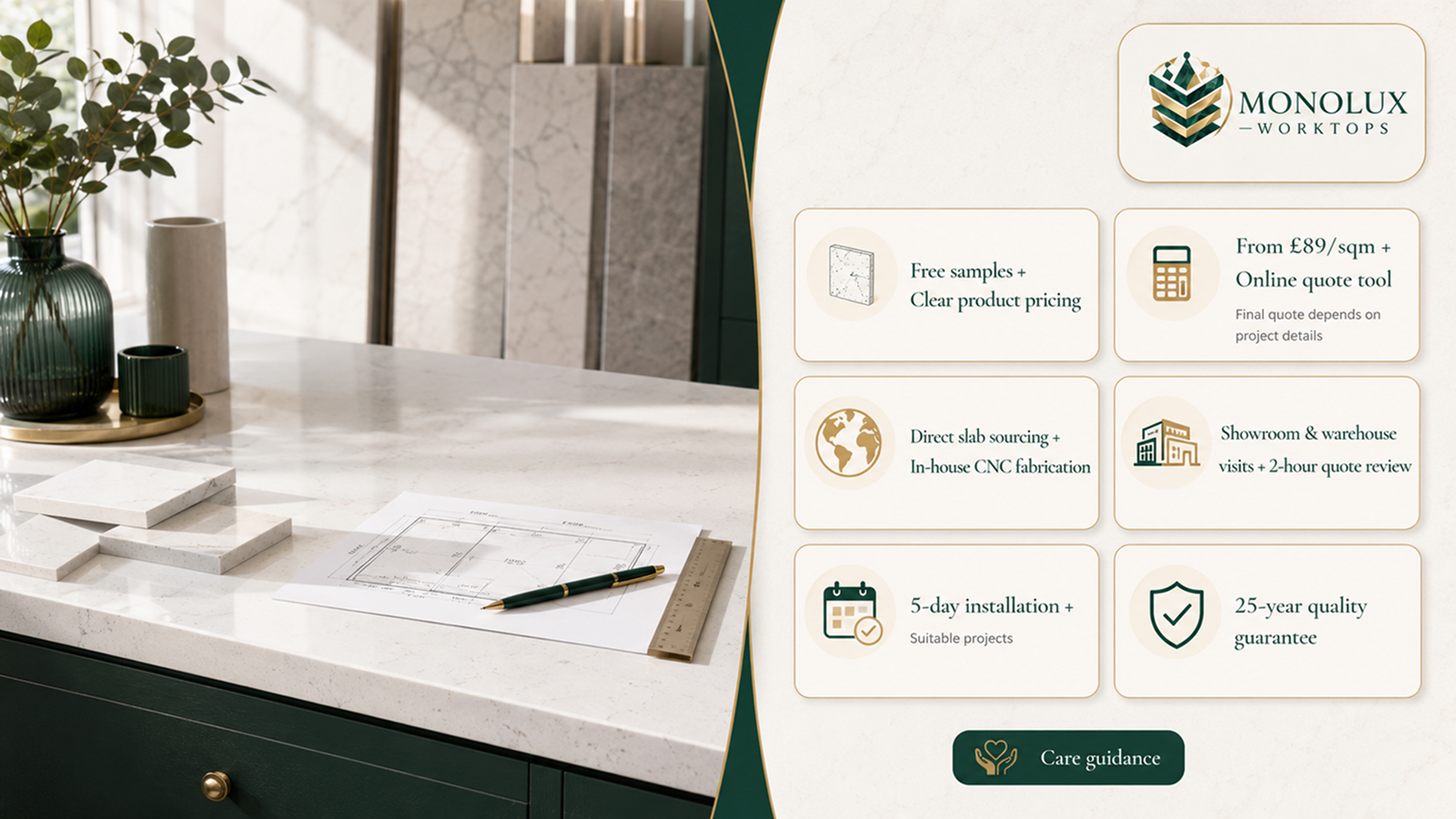
Choose Stain-Resistant White Quartz Worktops From MonoLux
At MonoLux, we supply, fabricate and fit white quartz worktops that give kitchens a bright, clean finish without making everyday care difficult. Our white quartz range includes plain white, sparkle, soft white and marble-effect designs, so you can choose a surface that matches your kitchen style, lighting and daily routine.
With MonoLux, you can benefit from:
- Free samples to check the colour, pattern and finish in your own kitchen lighting.
- White quartz options from £89/sqm, with the final fitted price based on your measurements, cut-outs, thickness and installation details.
- Direct slab sourcing, which helps us keep pricing competitive without cutting corners on the finished result.
- In-house CNC fabrication for accurate cut-outs, edges, joins and finishing details.
- A showroom and warehouse where you can view slabs and compare finishes before choosing.
- A 2-hour expert quote review, so your layout, cut-outs, splashbacks and fitting details are checked properly.
- Fast installation on suitable projects, with template-to-installation available in 5 days where the material and project details allow.
- A 25-year quality guarantee for long-term confidence in your quartz surface.
- Care guidance after fitting, so you know how to keep your white quartz bright without using the wrong products.
Use our kitchen worktop online quote to choose your quartz colour, add your fitting details and get a clearer fitted price for your kitchen today!
FAQs
- Do white quartz worktops stain?
White quartz worktops are highly stain-resistant because quartz is non-porous. Most spills stay on the surface and can be wiped away. The risk goes up with strong pigments, oily residue, dye-based products, harsh cleaners or spills left to dry on the surface. - Why is my white quartz staining?
White quartz may look stained because of dried residue, limescale, cleaner haze, food pigment, heat or chemical damage. Sink-area cloudiness often points to residue, while yellow or brown marks near a hob usually suggest heat exposure. - Does white quartz mark easily?
White quartz can show marks more quickly than darker or busier surfaces because the background is bright. Plain white quartz shows crumbs, water spots and cleaner haze faster, while sparkle, soft-veined and marble-effect white quartz can disguise small daily marks better. - What stains the worst on quartz?
The highest-risk stains usually come from strong pigments and dye-based products. Turmeric, curry sauce, beetroot, red wine, tomato-based sauces, hair dye, permanent marker and nail products should be cleaned faster than lighter everyday spills. - How do you get stains off white quartz?
Clean white quartz with warm water, mild detergent and a soft cloth. Rinse, dry fully and use a non-abrasive quartz-safe cleaner for dried residue. If a mark is yellow, brown or dull, ask your supplier before scrubbing harder. - How do you get yellow stains out of white quartz?
Check the mark’s location first. Near a sink, yellowing may be residue or limescale. Near a hob, it may be heat damage. Near a sunny window, it may be UV-related. Use gentle cleaning first and avoid bleach or abrasive pads. - What should you not use to clean quartz worktops?
Avoid oven cleaner, caustic soda, paint stripper, strong acidic or alkaline cleaners, high-concentration bleach, solvents, metal scourers, steel wool and abrasive pads. These can dull the finish or damage the resin in the quartz. - Will vinegar ruin quartz?
Vinegar is acidic, so it should not be used as a regular quartz cleaner. Occasional contact is unlikely to ruin a good quartz worktop instantly, but repeated use can dull the finish over time. Use warm water, mild detergent and a soft cloth for daily cleaning. - Can you seal quartz so it does not stain?
Quartz worktops do not need sealing. The surface is already non-porous, so sealers are not part of normal quartz maintenance. Stain resistance comes from the material quality, correct fitting and good daily care, not from applying a sealer later.