
Choosing between Carrara quartz and real marble is one of the most important decisions during a kitchen renovation. Both materials offer a timeless marble-inspired appearance, but they differ significantly in maintenance, durability, cost, and long-term practicality.
Those exploring White Quartz Colours are often attracted to Carrara-inspired surfaces because they combine the elegance of natural marble with the performance benefits of engineered stone.
If you are new to Carrara-inspired surfaces, our complete guide to Carrara Quartz Worktops: Classic Marble Look Without the Maintenance explains why they remain one of the most popular choices for modern kitchens.
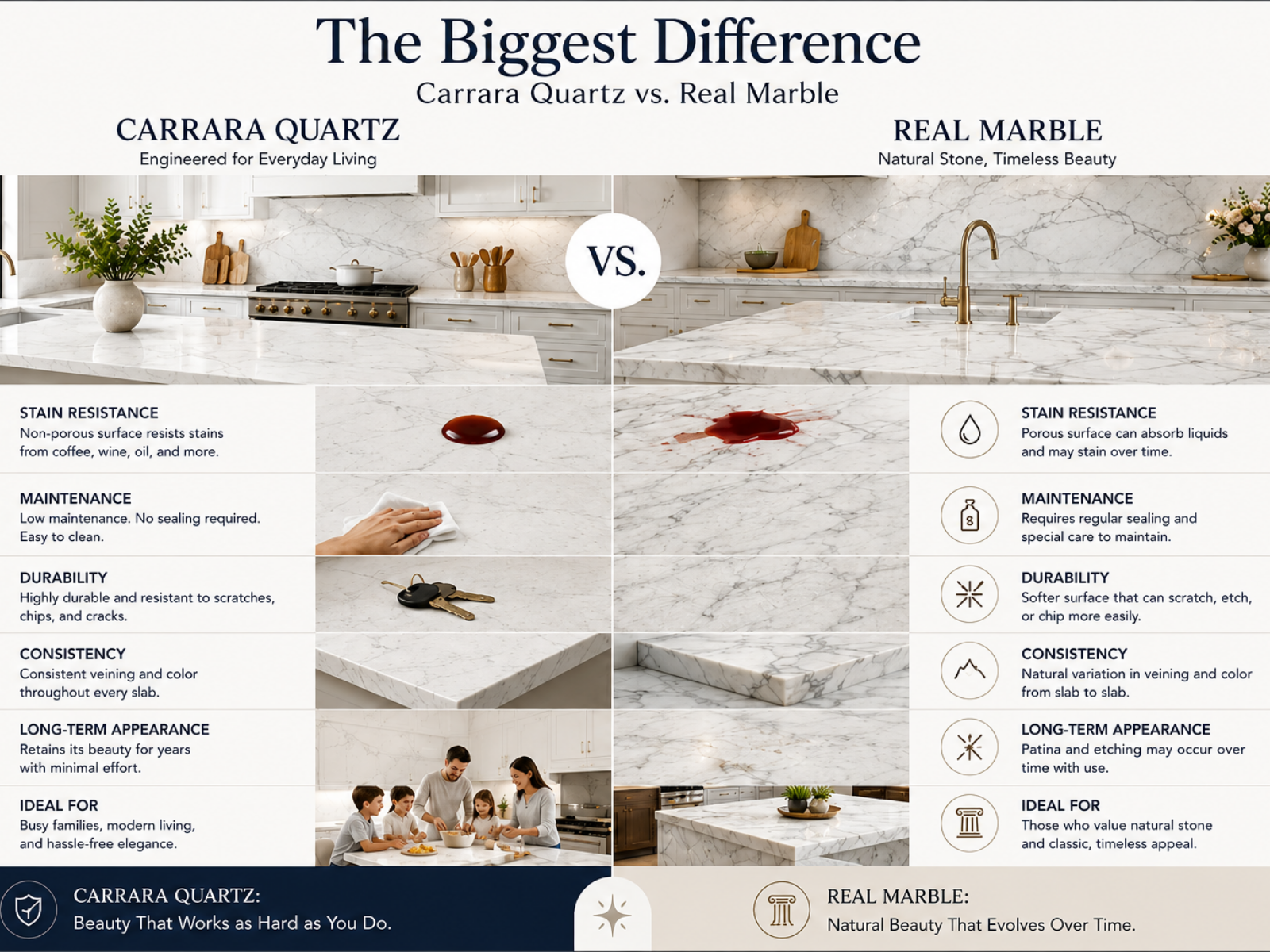
What Is the Difference Between Carrara Quartz and Real Marble?
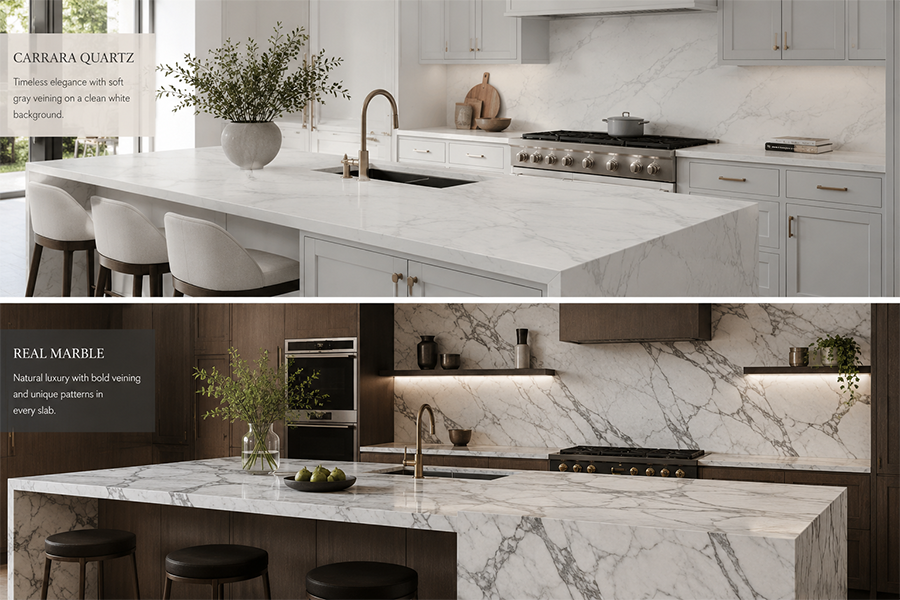
Although Carrara quartz is designed to replicate the appearance of natural Carrara marble, the two materials are fundamentally different.
Carrara marble is a natural stone formed over millions of years through geological processes.
Carrara quartz is an engineered surface manufactured using:
- natural quartz minerals
- resins
- pigments
While both materials can appear remarkably similar once installed, the way they perform in daily use is very different.
This difference affects:
- maintenance requirements
- stain resistance
- durability
- installation considerations
- long-term ownership costs
far more than appearance alone.
Appearance: Which Looks More Natural?
Natural Carrara marble remains the benchmark for authenticity.
Every slab is unique, featuring subtle variations in:
- veining
- movement
- mineral composition
- background tone
These natural inconsistencies are part of what makes marble so desirable.
However, modern quartz manufacturing has improved dramatically over the last decade.
Premium Carrara quartz surfaces now feature:
- realistic veining
- balanced movement
- natural-looking backgrounds
- softer contrast
Designs such as Bianco Carrara remain particularly popular because they closely capture the softer marble appearance traditionally associated with Italian stone.
For most kitchens, the visual difference between high-quality Carrara quartz and natural marble becomes surprisingly difficult to identify once installation is complete.
Stain Resistance and Maintenance
In everyday kitchens, maintenance is often where the biggest difference becomes apparent.
Carrara Marble
Natural marble is porous.
This means liquids can penetrate the surface if spills are left untreated.
Common concerns include:
- coffee stains
- red wine
- cooking oils
- acidic foods
Marble can also develop etching when exposed to:
- lemon juice
- vinegar
- tomatoes
- citrus-based cleaners
To maintain performance and appearance, marble typically requires periodic sealing.
Carrara Quartz
Quartz is non-porous.
As a result, it generally offers:
- easier cleaning
- greater stain resistance
- lower maintenance
- improved practicality
For busy kitchens, this often becomes one of quartz’s biggest advantages.
Durability and Everyday Performance
Both materials are durable, but they respond differently to everyday use.
Marble
Natural marble can develop:
- surface scratches
- etching
- wear patterns
- minor surface marks
particularly in heavily used kitchens.
Some people appreciate this natural ageing process, while others prefer a surface that maintains a more consistent appearance.
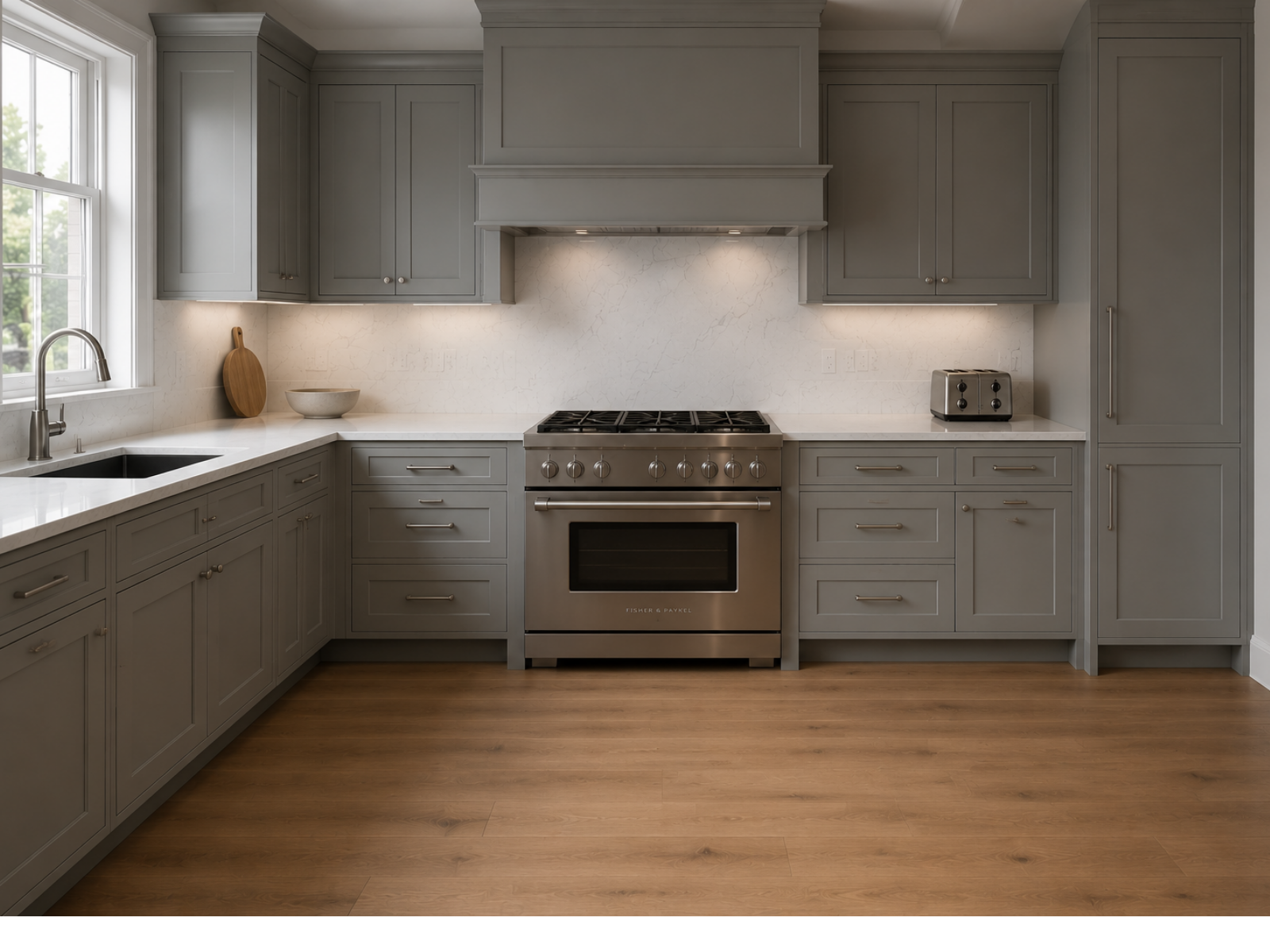
If you are comparing interior styles and cabinetry combinations, see:
Quartz
Carrara quartz is engineered specifically to withstand the demands of modern kitchens.
It offers excellent resistance to:
- moisture
- staining
- everyday spills
- routine wear
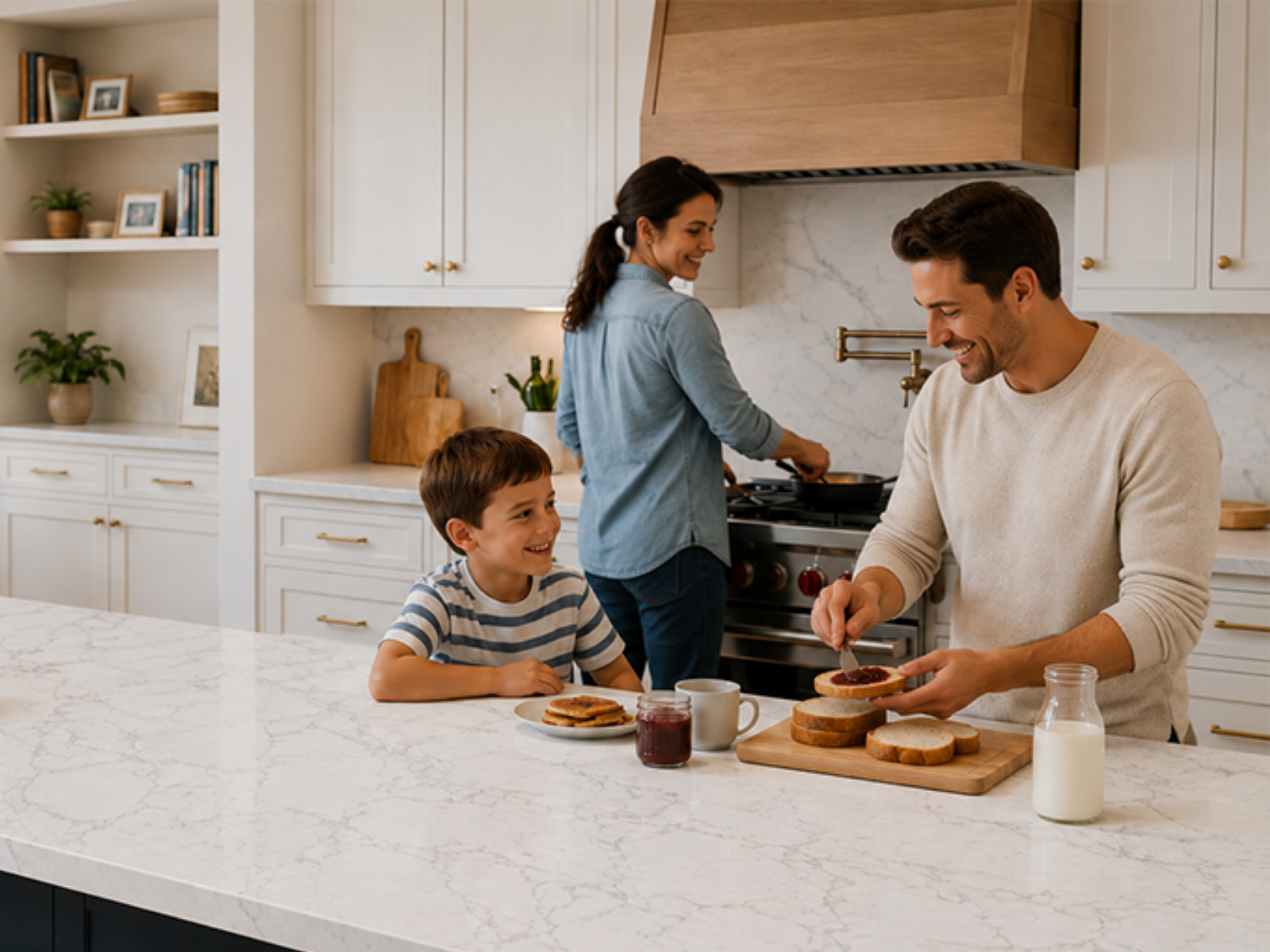
This practical performance is one of the reasons Carrara quartz remains such a popular choice in family homes and high-use kitchen environments.
Consistency vs Natural Variation
One difference that is often overlooked during the planning stage is visual consistency.
Natural Carrara marble is quarried directly from the earth, meaning every slab features unique veining, movement, and colour variation. While this individuality is part of marble’s appeal, it can also make it more difficult to achieve a perfectly uniform look across larger kitchens.
Carrara quartz offers a more controlled appearance. Because it is engineered during manufacturing, the veining pattern, background colour, and overall design remain far more consistent from slab to slab.
For some projects, especially larger islands and open-plan kitchens, this predictability can make the design and installation process significantly easier.
Which Material Works Best for Everyday Living?
The answer largely depends on your priorities.
Choose Carrara marble if you value:
- natural uniqueness
- authentic stone character
- traditional luxury
- geological variation
Choose Carrara quartz if you value:
- low maintenance
- stain resistance
- practical performance
- long-term durability
In most modern kitchens, practicality often becomes just as important as appearance.
Cost Comparison
One common misconception is that marble is always the more luxurious option.
In reality, the overall investment depends on far more than the initial material price.
When comparing total quartz worktop cost, it is important to consider:
- installation
- maintenance
- sealing requirements
- long-term upkeep
| Material | Initial Cost | Maintenance Costs | Long-Term Value |
| Carrara Marble | High | High | Moderate |
| Carrara Quartz | Mid-to-high | Low | High |
Marble often involves additional maintenance expenses throughout its lifespan, whereas quartz generally offers more predictable ownership costs and fewer ongoing requirements.
Carrara Quartz vs Other Marble-Inspired Styles
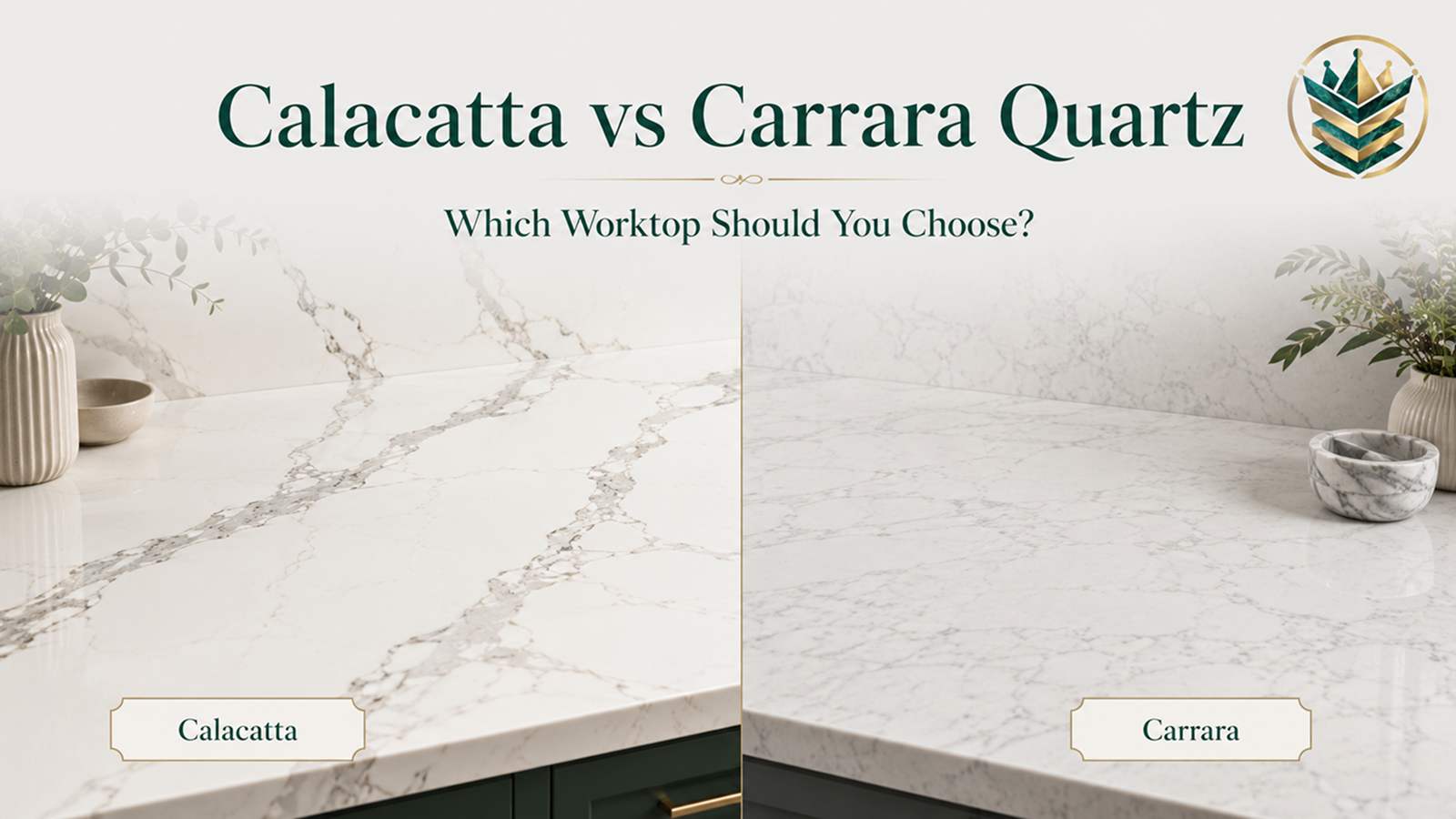
Carrara quartz is known for its softer and more understated appearance.
By comparison, surfaces featured within Calacatta Quartz Colours typically offer:
- bolder veining
- stronger contrast
- brighter white backgrounds
- more dramatic visual impact
Neither style is inherently better.
Carrara quartz usually appeals to those seeking a calmer and more versatile aesthetic, while Calacatta-inspired surfaces are often selected when a stronger statement is desired.
Beyond Appearance: Choosing the Right Fit
Appearance matters, but so do practicality and everyday usability.
A surface that looks impressive in a showroom may not always be the best choice for a busy kitchen environment.
If your project involves a compact layout, read:
👉 Does Carrara Quartz Work in Small Kitchens?
Long-Term Value
One reason Carrara quartz continues to perform strongly in modern kitchens is its balance.
It combines:
- marble-inspired aesthetics
- easy maintenance
- durability
- versatility
This makes it suitable for a wide range of properties, from compact flats to large family homes.
Surfaces such as Alaska Bianco are frequently selected because they offer a similarly bright and elegant appearance while maintaining the practical advantages associated with quartz.
Final Thoughts
Both Carrara quartz and real marble can create beautiful kitchens.
Marble offers authenticity, natural variation, and centuries of architectural heritage. Carrara quartz provides many of the same visual qualities while delivering easier maintenance, greater stain resistance, and improved practicality for everyday use.
Whether your priority is appearance, durability, or long-term value, exploring different options across our Quartz Worktop in the UK collection can help you make a more informed decision.
If you are comparing materials for an upcoming renovation, requesting a kitchen worktop quote is often the easiest way to evaluate specifications, pricing, and installation requirements more accurately.
Frequently Asked Questions
- Does Carrara quartz look like real marble?
High-quality Carrara quartz can look remarkably similar to real marble, particularly designs featuring realistic veining and balanced movement. - Is Carrara quartz cheaper than marble?
In many cases, yes. Quartz often provides lower long-term ownership costs because it does not require sealing or specialist maintenance. - Which is easier to maintain?
Carrara quartz is generally easier to maintain because it is non-porous and highly stain-resistant. - Can marble stain more easily than quartz?
Yes. Marble is naturally porous and can absorb liquids if spills are not cleaned quickly. - Is Carrara quartz suitable for family kitchens?
Absolutely. Its durability, stain resistance, and low-maintenance nature make it particularly well-suited to busy households. - Which lasts longer?
Both materials can last for decades, but quartz generally maintains its appearance more consistently because it is less vulnerable to staining and etching. - Is Carrara quartz worth the investment?
For those seeking a marble-inspired appearance without ongoing maintenance concerns, Carrara quartz often provides excellent long-term value. - Is Carrara quartz better than Calacatta quartz?
Neither is inherently better. Carrara quartz offers a softer and more understated appearance, while Calacatta quartz creates a bolder and more dramatic visual impact.