
When designing or renovating a kitchen, homeowners face a multitude of decisions, but none is as critical to the longevity of the space as the work surface. As you explore current kitchen worktop trends, including the highly sought-after Calacatta Quartz Colours, you will undoubtedly encounter a vast array of materials, each claiming superior strength. However, the recurring question remains: what type of worktop is most durable? Selecting the right worktops requires understanding the specific demands of your household, from high-heat cooking to heavy-impact food preparation. This comprehensive guide will explore the durability and resistance of various worktops to help you make an informed investment.
What Countertop Durability Is
Durability in worktops is not a single metric; it is a combination of several physical properties that dictate how well a material withstands the rigours of daily life. When we ask what type of countertop is most durable, we are actually asking which material offers the best balance of resistance to various destructive forces. A surface might be incredibly hard and resistant to scratching, but brittle and prone to chipping if a heavy pot is dropped on the edge. True durability encompasses structural integrity, chemical stability, and thermal resilience.
5 Durability Qualities to Look for in worktops
To properly evaluate worktops, you must assess them against these five critical qualities:
- Scratch Resistance: Measured by the Mohs hardness scale, this determines how easily knives, keys, or ceramic mugs will gouge the surface.
- Heat Resistance: The ability of worktops to withstand hot pots and pans without scorching, cracking (thermal shock), or melting.
- Stain and Porosity Resistance: How well the material repels liquids like wine, oil, and acidic juices. Non-porous surfaces score highest here.
- Impact Resistance: The tensile strength required to survive heavy objects being dropped without chipping or fracturing.
- Chemical Resistance: The ability to withstand harsh household cleaners without losing polish or structural integrity.
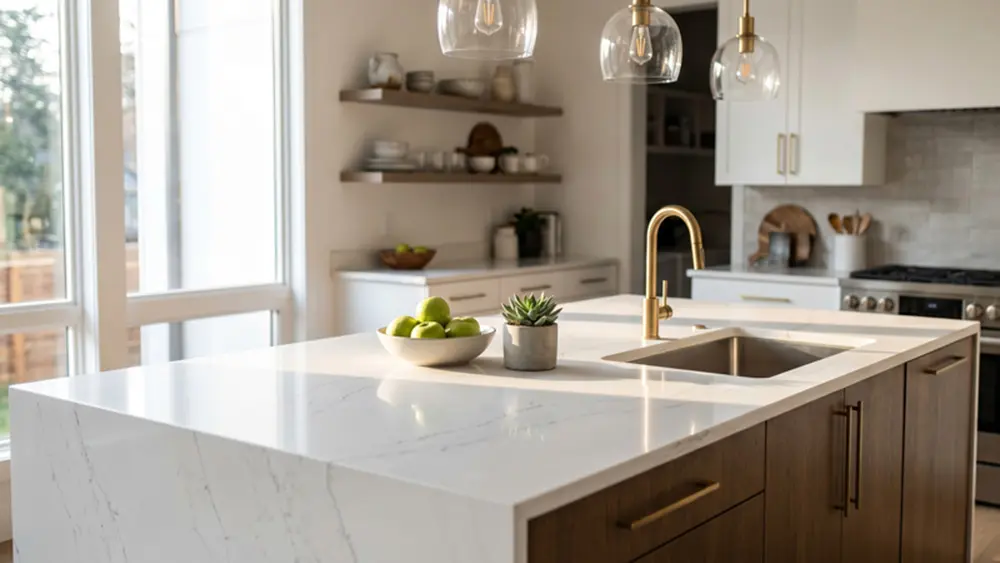
Quartz worktops
When evaluating what type of countertop is most durable, engineered stone frequently tops the list. A quartz worktop is manufactured by combining roughly 90% crushed natural quartz with 10% polymer resins and pigments. This creates a surface that is incredibly dense and uniform. People often ask, ‘Do quartz worktops need sealing? The answer is no; the resin binds the minerals completely, creating a non-porous barrier.
Cost
The overall quartz worktop cost represents a premium investment. Prices typically range from £37 to £88 per square metre, including installation.
Pros
- Exceptional durability and resistance to scratches and chips.
- Completely non-porous, meaning unparalleled stain resistance.
- Zero maintenance required (no sealing).
- Vast array of consistent colours and patterns, allowing you to achieve luxurious marble effects with specific models like the Mono Calacatta Gold.
Cons
- Moderate heat resistance; hot pans can scorch the resin binders.
- Can fade or discolour if exposed to direct, prolonged UV sunlight (not suitable for outdoor use).
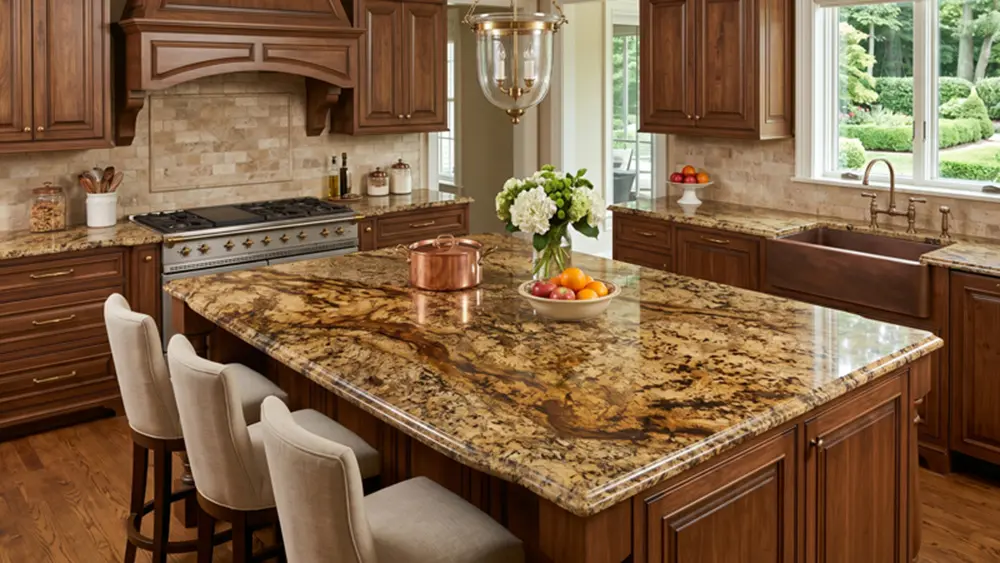
Granite worktops
For decades, natural stone has been the gold standard for robust worktops. A granite worktop is quarried directly from the earth and cut into solid slabs. Because it is a natural igneous rock forged by extreme heat and pressure, it inherently possesses incredible durability and resistance.
Cost
The cost of these worktops varies wildly based on the rarity of the stone, ranging from £29 to £110+ per square metre installed.
Pros
- Excellent heat resistance; can generally handle hot pans directly.
- Extremely hard and highly resistant to scratching.
- Every slab is 100% unique, offering unmatched natural beauty.
- Suitable for both indoor and outdoor worktops.
Cons
- Naturally porous; requires periodic sealing to prevent permanent stains.
- Can chip if subjected to heavy, blunt force on the edges.
- Complex installation requires professional fabricators.
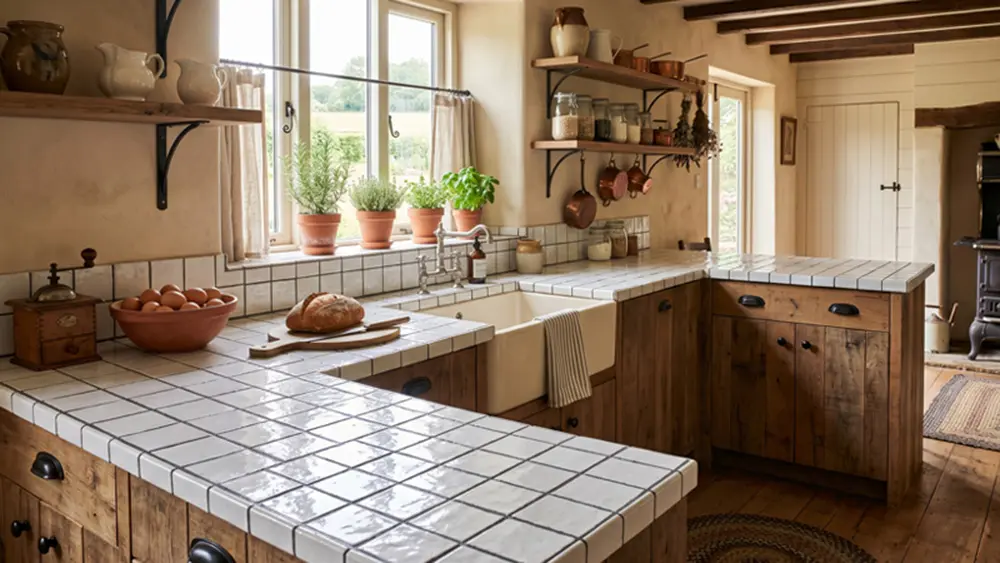
Tile worktops
Ceramic and porcelain tiles offer a highly customisable approach to worktops. While porcelain tiles themselves are incredibly hard and durable, the overall surface must be evaluated as a system that includes the grout.
Cost
Tile is one of the most budget-friendly worktops, ranging from £8 to £30 per square metre, making it highly accessible.
Pros
- Highly heat-resistant.
- Individual damaged tiles can be replaced without removing the whole counter.
- Wide variety of colours, shapes, and patterns.
Cons
- Grout lines are highly prone to staining and bacterial growth.
- The uneven surface can make food prep difficult.
- Ceramic tiles can crack under heavy impact.
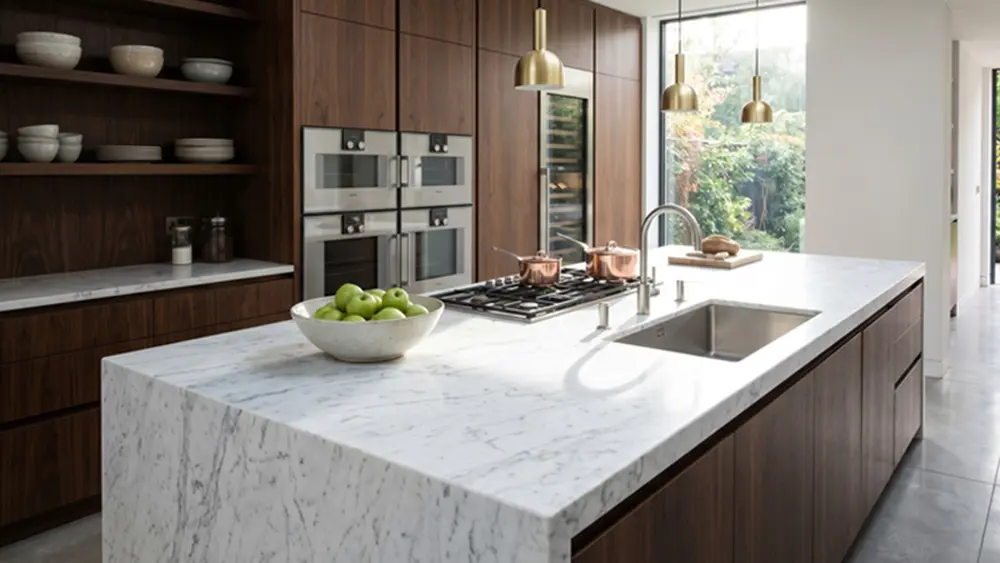
Marble worktops
Marble is synonymous with luxury and baking. However, when evaluating what type of countertop is most durable, marble falls short compared to granite and quartz. It is a metamorphic rock composed largely of calcite, making it relatively soft.
Cost
Marble is a luxury material, ranging from £44 to £148 per square metre, depending on the origin and veining.
Pros
- Unrivalled, classic aesthetic appeal.
- Naturally cool surface, ideal for pastry preparation.
- Excellent heat resistance.
Cons
- Highly porous and prone to deep stains.
- Soft mineral composition makes it very susceptible to scratching and chipping.
- Etches easily upon contact with acidic liquids like lemon juice or vinegar.
Factors to Consider for Choosing a Countertop Material
Choosing the right material goes beyond simply asking what type of countertop is most durable. You must consider the specific dynamics of your home. If you have young children and cook daily, prioritise stain and impact resistance. Furthermore, the quality of the installation is paramount; even the strongest stone can crack if not levelled properly over the cabinets. Partnering with experienced fabricators, such as Monolux Worktops, ensures that your chosen material is perfectly fitted to maximise its lifespan and structural integrity.
Many homeowners start by comparing durability alone, but there’s a lot more involved when choosing the right surface for a kitchen renovation. From understanding realistic pricing and colour options to learning how different materials perform over time, this complete guide to choosing quartz worktops in the UK breaks down the key things buyers often overlook before making a final decision.
Why do people prefer quartz over granite?
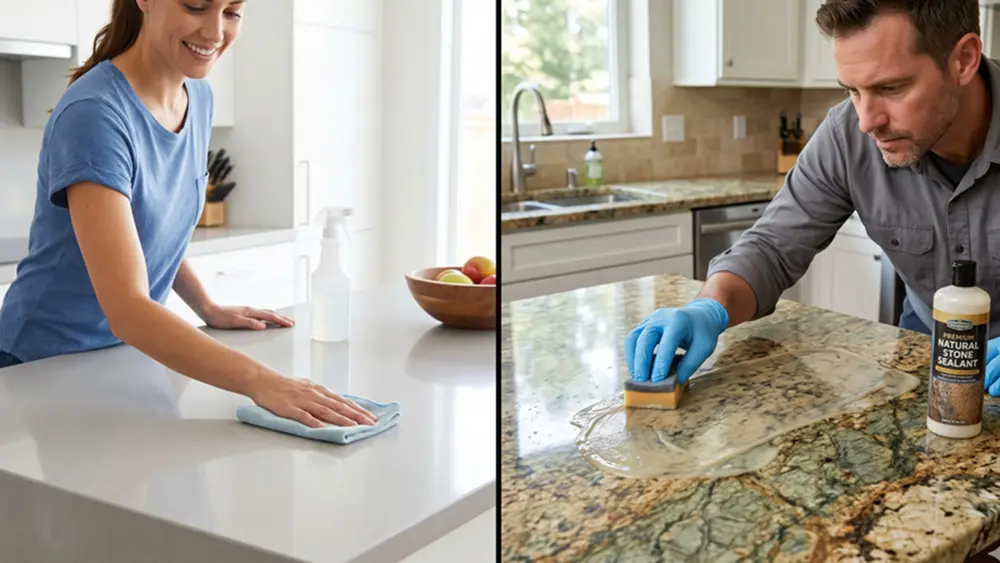
The preference often comes down to maintenance. While granite offers superior heat resistance, quartz provides a completely non-porous surface that never requires sealing. This low-maintenance aspect, combined with a highly uniform quartz worktop colour that fits modern design trends, makes it an incredibly popular choice for busy households seeking high durability and resistance without the upkeep.
What is the most scratch-resistant worktop?
Natural granite and engineered quartz are tied for the title of the most scratch-resistant worktops. Both rely on quartz minerals, which score a 7 on the Mohs hardness scale. This means only materials harder than quartz (like diamonds or certain heavy-duty masonry tools) can effectively scratch them under normal culinary conditions.
What is the hardest worktop to maintain?
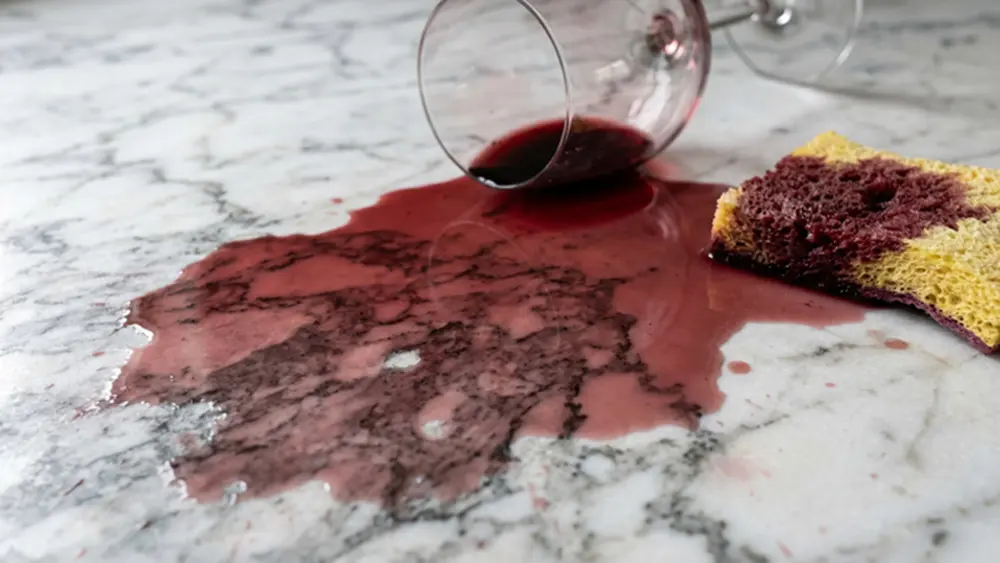
Marble and wood (butcher block) are generally the hardest worktops to maintain. Marble requires meticulous vigilance to prevent acid etching and deep stains, requiring frequent sealing. Wood requires regular oiling to prevent drying and cracking, and it must be sanded down if deep scratches or burns occur.
Is granite better than a wooden worktop?
In terms of pure durability and resistance, yes. Granite is vastly superior to wood. It is heat-resistant, highly scratch-resistant, and won’t harbour bacteria in deep gouges. Wood worktops offer a warm aesthetic and are great for chopping, but they require significant, ongoing maintenance and are highly susceptible to heat, water damage, and scratching.
What is the cheapest, most durable countertop?
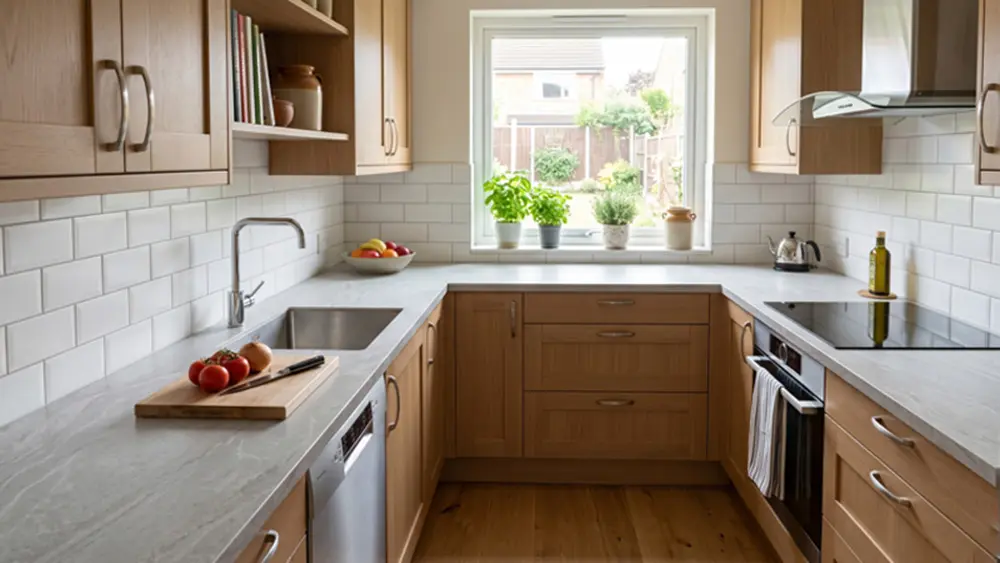
If you are strictly balancing an extreme budget with functional longevity, high-pressure laminate worktops are the winner. While they lack the structural permanence of stone, modern laminates resist daily wear surprisingly well if protected from direct heat and heavy impact. For a step up in durability without reaching premium stone prices, large-format porcelain tile is highly durable and cost-effective.
Discover the Most Durable Countertop for Your Space Today!
Understanding what type of countertop is most durable allows you to balance your aesthetic desires with practical reality. Whether you choose the unparalleled heat resistance of a granite worktop or the zero-maintenance perfection of engineered stone, your worktops represent the foundation of your kitchen’s functionality. Carefully weigh the durability and resistance of each material against your lifestyle, budget, and culinary habits to ensure your worktops serve you beautifully for decades to come.
Frequently Asked Questions (FAQ)
Can I cut directly on my stone worktops? While materials like granite and engineered stone are highly scratch-resistant, cutting directly on them can dull your expensive kitchen knives. It is always recommended to use a cutting board.
How often do natural stone Worktops need to be sealed? Generally, natural stone should be sealed once a year. However, if water no longer beads up on the surface and instead darkens the stone, it is time to reapply the sealant immediately.
Are there indestructible worktops? No worktops are entirely indestructible. Even the strongest stone can chip under a severe, concentrated impact (such as dropping a heavy cast-iron pan on the very edge), and extreme thermal shock can cause cracking.