
If you love the luxury appearance of marble but are worried about staining, maintenance, or long-term practicality, you are not alone. One of the biggest questions homeowners now ask before renovating is whether marble-effect quartz can realistically replace genuine marble in a modern kitchen.
Here’s the quick answer:
- Real marble offers completely natural veining and unique stone movement
- Marble-effect quartz is far easier to maintain in everyday kitchens
- Quartz is significantly more resistant to stains and scratches
- Marble develops natural ageing and patina over time
- Most UK homeowners now prioritise practicality over pure authenticity
- High-end quartz can now look remarkably close to real marble
From our recent installations across Surrey, Berkshire, and London, most homeowners now choose marble-inspired quartz because it delivers the luxury appearance of marble without the ongoing maintenance concerns associated with natural stone.
At Monolux Worktops, we’ve also seen a major increase in demand for softer marble-inspired surfaces that combine premium aesthetics with better long-term practicality. Many of the most popular marble-inspired surfaces now sit within the broader range of Calacatta Quartz Colours, where manufacturers focus on recreating the elegance of natural marble while delivering the consistency and durability that modern kitchens demand. This balance between realism and practicality is one of the main reasons Calacatta-inspired quartz continues to grow in popularity across the UK.
What’s the Real Difference Between Marble and Quartz?
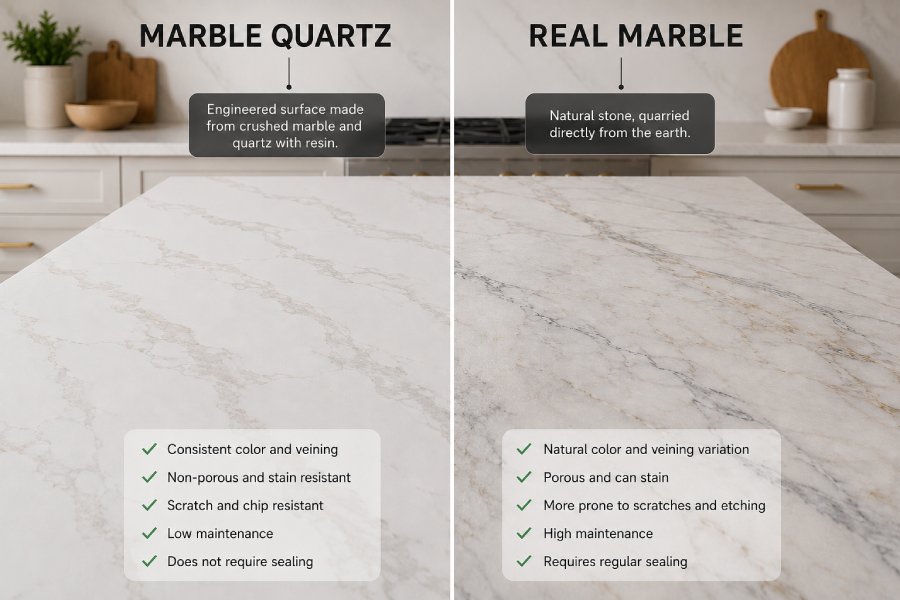
Although marble-effect quartz is designed to resemble natural marble, the two materials behave very differently in real kitchens.
Real marble is a completely natural stone formed over thousands of years, which means:
- Every slab is unique
- Veining is naturally irregular
- Colour variation is unpredictable
Quartz, however, is engineered using:
- natural quartz minerals
- resins
- pigments
This creates a far more controlled and consistent surface.
The biggest difference for most homeowners is not appearance alone — it is how the material performs once the kitchen is used every day.
Real Marble Looks More Organic
Natural marble usually has:
- deeper visual movement
- unpredictable veining
- softer transitions
- unique slab variation
This is why many homeowners still consider marble the most luxurious kitchen surface available.
However, marble can also feel visually busier in some kitchens, especially when heavily patterned slabs are used in smaller spaces.
Modern Quartz Looks More Consistent
One reason marble-effect quartz has become so popular is that it offers:
- cleaner consistency
- controlled veining
- easier slab matching
- more predictable layouts
Many modern homeowners now actually prefer this softer and more balanced appearance, particularly in contemporary kitchens. Rather than relying on dramatic contrast alone, many premium quartz surfaces now focus on controlled veining and cleaner slab layouts. Designs such as Mono Calacatta Classic and Mono Calacatta Borghini have become popular examples of this approach, offering a refined marble-inspired appearance that feels both realistic and timeless.
If you are comparing realistic marble-inspired surfaces, read:
👉 Which Calacatta Quartz Looks Most Like Real Marble?
Which Material Is Easier to Maintain?
This is where quartz usually wins comfortably for everyday family kitchens.
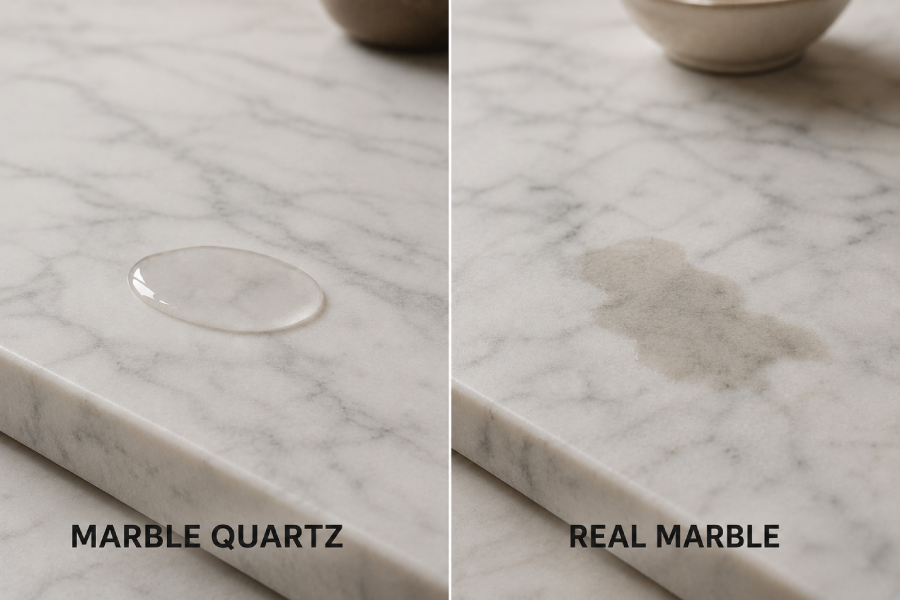
Real marble is porous, meaning liquids can penetrate the surface more easily.
Quartz is non-porous, which makes it significantly more resistant to:
- staining
- moisture absorption
- everyday spills
In busy kitchens, this becomes a major practical advantage.
Marble Requires More Ongoing Care
Real marble usually requires:
- sealing
- careful cleaning
- protection from acidic substances
- faster spill removal
Substances such as:
- lemon juice
- wine
- coffee
- vinegar
can sometimes mark marble if left sitting too long.
Over time, natural etching can also appear around heavily used areas.
Quartz Is Designed for Easier Everyday Use
Quartz generally suits homeowners wanting:
- lower maintenance
- easier cleaning
- less stress
- stronger stain resistance
Most quartz worktops simply require:
- warm water
- mild detergent
- soft cloth cleaning
without specialist maintenance routines.
Which Looks More Luxurious in Real Kitchens?
This depends entirely on the type of luxury you prefer.
Marble Creates Traditional Natural Luxury
Real marble often feels:
- more organic
- softer visually
- naturally unique
- highly architectural
This is why marble remains popular in:
- ultra-premium homes
- classic interiors
- statement kitchens
particularly when homeowners prioritise authenticity above practicality.
Quartz Creates Cleaner Modern Luxury
Marble-effect quartz usually feels:
- cleaner
- brighter
- more controlled
- easier to style consistently
This is one reason quartz now dominates many:
- contemporary renovations
- open-plan kitchens
- handleless kitchen designs
throughout the UK.
One of the biggest shifts in recent years has been the growing preference for warmer marble-inspired surfaces over colder grey alternatives. Rather than relying on dramatic contrast alone, many modern kitchen designs now favour softer veining and a more inviting overall aesthetic.
This trend helps explain why gold-veined quartz is so popular, particularly among homeowners looking to combine contemporary practicality with a warmer sense of luxury.
Which Material Ages Better Over Time?
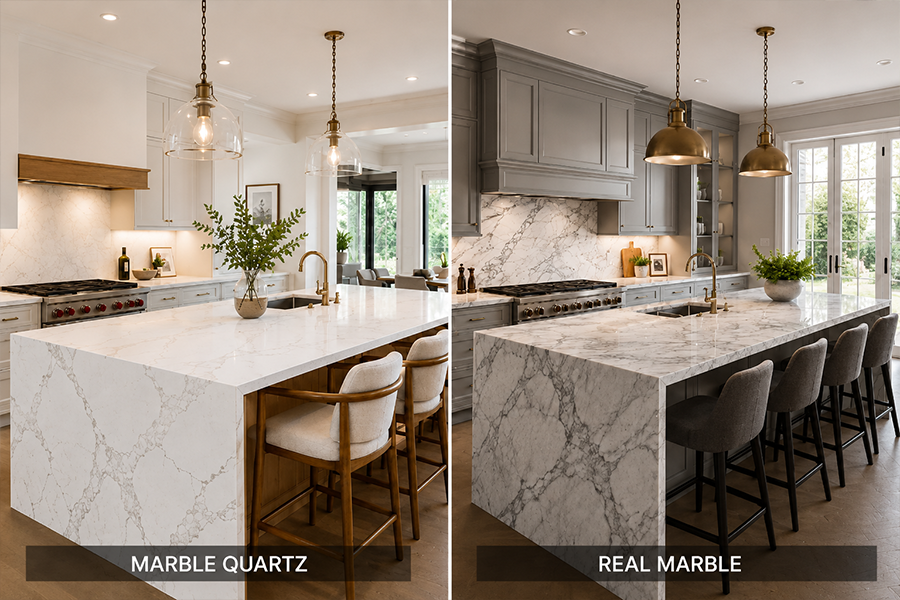
This is one of the biggest differences between marble and quartz.
Marble Develops Natural Patina
Over time, marble naturally changes.
Some homeowners love this because it creates:
- character
- ageing
- lived-in texture
- authentic stone wear
Others find the visible ageing stressful in busy kitchens.
Quartz Maintains a More Consistent Appearance
Quartz usually changes very little visually over time.
This makes it ideal for homeowners wanting kitchens that continue to look:
- clean
- bright
- polished
- low maintenance
even after years of daily use.
Which Is Better for Family Kitchens?
In most modern UK homes, quartz is usually the safer, practical option.
Busy family kitchens often involve:
- heavy cooking
- spills
- frequent cleaning
- constant worktop use
Quartz generally handles this environment more comfortably because it is:
- more stain-resistant
- less porous
- easier to maintain
- less sensitive to acidic foods
This is especially important in:
- open-plan homes
- high-traffic kitchens
- family renovations
where practicality matters just as much as aesthetics.
Does Quartz Still Look Realistic?
Modern marble-effect quartz has improved dramatically over the last few years.
Many premium surfaces now feature:
- softer vein movement
- brighter white backgrounds
- layered detailing
- more natural marble flow
The most convincing designs are usually those that balance realism with restraint. Instead of exaggerated movement, they focus on natural flow and subtle variation throughout the slab. Surfaces such as Mono Calacatta Luna and Mono Calacatta Eternal Grey are often chosen for exactly this reason.
Many homeowners now specifically search for:
- premium Calacatta quartz designs
- softer marble-inspired quartz
- warmer veining styles
If you are exploring warmer marble-inspired kitchen trends, read:
👉 Are Gold-Veined Quartz Worktops Still in Trend?
Which Material Works Better in Smaller Kitchens?
Quartz is often easier to use in compact kitchens because the veining and slab movement can feel more controlled visually.
Real marble sometimes creates:
- stronger visual movement
- heavier contrast
- busier surfaces
especially when darker, dramatic veining is used.
Softer marble-inspired quartz usually works better in:
- smaller extensions
- flats
- compact kitchens
- modern renovations
because it helps the room feel:
- brighter
- calmer
- more open
If you are exploring kitchen styles and finishes, choosing the right quartz worktop colour can dramatically change how spacious the room feels overall.
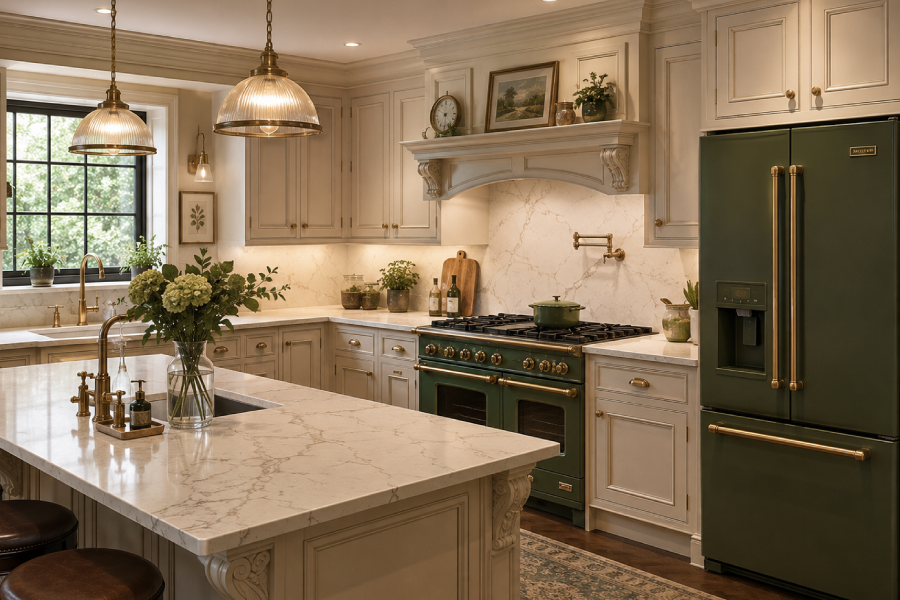
In smaller kitchens, the combination of softer veining and a brighter surface can make a noticeable difference to the overall feel of the room. Lighter designs tend to reflect more natural light and reduce visual heaviness, which is why many homeowners explore options within our White Quartz Colours collection when looking to create a brighter and more open space.
Comparing Costs: Marble vs Quartz
Real marble is usually more expensive overall once:
- sealing
- fabrication
- maintenance
- long-term care
are considered.
Quartz prices vary depending on:
- slab complexity
- thickness
- finish
- fabrication requirements
However, quartz often provides stronger long-term value for homeowners prioritising durability and practicality.
If you are comparing renovation budgets, layouts, and installation pricing, see:
👉 Kitchen quote
So, Which One Should You Choose?
If you prioritise:
- authenticity
- natural stone ageing
- completely unique slabs
Real marble may still appeal to you.
However, if you want:
- easier maintenance
- stronger stain resistance
- better practicality
- lower long-term upkeep
Marble-effect quartz is usually the better overall fit for modern UK kitchens.
From our recent installations, most homeowners now choose quartz because it delivers luxury aesthetics with far fewer compromises in daily life.
Final Thoughts
Real marble remains one of the most beautiful kitchen materials available, but modern marble-effect quartz has become remarkably convincing in contemporary kitchens.
For most UK homeowners, the decision now comes down to:
- authenticity vs practicality
- natural ageing vs consistency
- Maintenance vs convenience
The good news is that premium quartz surfaces now offer many of the visual qualities homeowners love about marble while being significantly easier to maintain long-term.
If you are planning a renovation and want to compare surfaces in person, the best next step is viewing larger slab samples under your kitchen lighting conditions.
Ready to buy a unique worktop for your project?
👉 Buy a unique worktop
Frequently Asked Questions (FAQ)
- Is quartz better than real marble for kitchens?
For most family kitchens, quartz is usually more practical because it is less porous and easier to maintain. - Does marble stain more easily than quartz?
Yes. Marble is naturally porous and more vulnerable to staining and etching over time. - Can quartz really look like real marble?
Modern premium quartz can now look remarkably close to genuine marble, especially softer Calacatta-inspired surfaces. - Which is more expensive: marble or quartz?
Real marble is often more expensive overall once fabrication, sealing, and long-term maintenance are considered. - Does marble age better than quartz?
Some homeowners love the natural patina marble develops, while others prefer the more consistent appearance quartz maintains over time. - Which surface is best for busy family kitchens?
Quartz is usually the safer choice for busy kitchens because it offers stronger stain resistance and easier day-to-day maintenance.